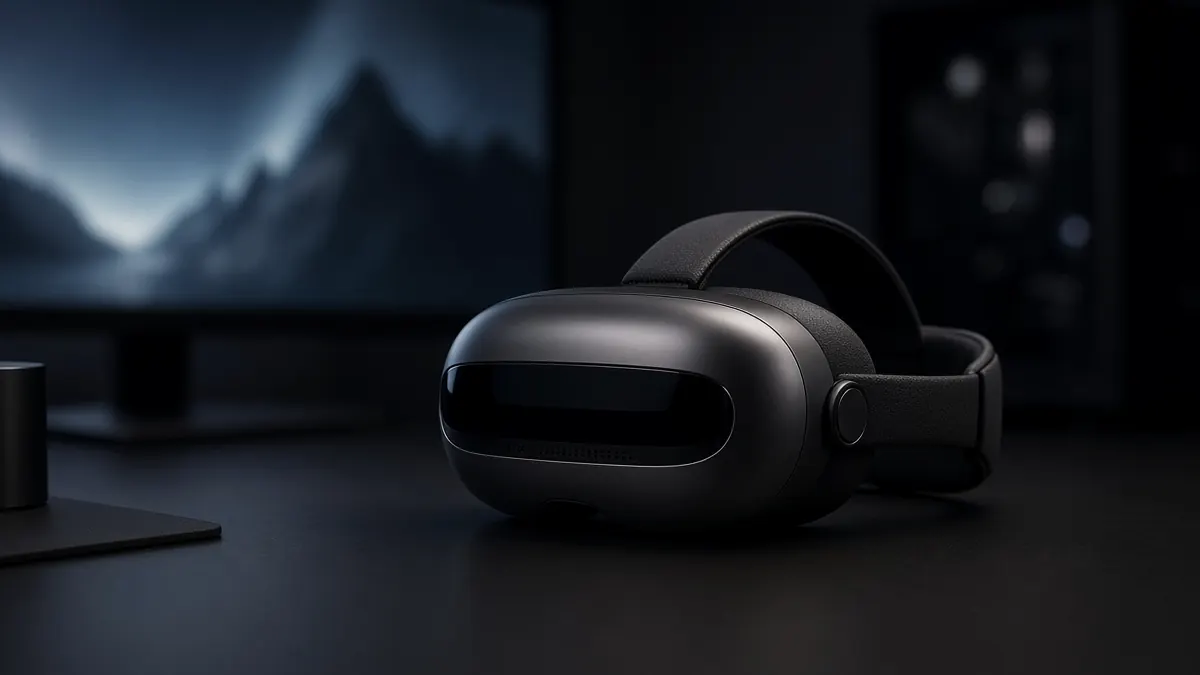
Valve engineers Pierre-Loup Griffais and Jeff Leinbaugh said the new Steam Frame headset is built to work two ways: as a streaming device and as a standalone headset. SteamOS is moving onto Arm as part of that bet.
They also said the global crunch in memory and storage shaped development. Anyone buying a new VR headset this year should expect that shortage to show up in the price. Sticker shock is the warning attached to the launch.
Griffais and Leinbaugh will not pick a lane
Some games will be streamed from a PC. Others will run on the device. Valve is not choosing one model, and that is the point of the interview.
Meta spent years proving standalone can be a business, from Quest 2 onward. PC VR spent the same years proving that the best-looking games still want a tower. Valve's Index in 2019 was a PC tether story. Steam Deck in 2022 was a Proton-and-SteamOS story on x86. Frame is an attempt to inherit both arguments without splitting the SKU.
Streaming keeps the heavy rasterization on a box you already own. Standalone means you can leave the house, or at least the desk. Doing both means two performance targets, two storefront expectations, and a support nightmare if Proton-class translation on Arm is even slightly wrong.
Tom's Hardware's conversation with Griffais and Leinbaugh is how this dual strategy landed in public, along with the memory warning. Valve did not, in the available account, publish a final price. The message is that it will not be a bargain.
Living-room streaming is not a new religion. Roku just piled more bundles onto a TV box, including HBO Max and Starz. Frame is streaming as a game pipeline, not a sitcom pipeline. The constraint is still bits and a bill.
Arm is the OS story hiding in a visor
SteamOS on Arm is bigger than one headset. If Valve can make that stick, Frame is also a test of whether Steam's living-room OS can leave x86. Deck trained a million people to believe Linux gaming was shippable. Arm is a new compiler, a new GPU driver fight, and a new set of anti-cheat arguments.
Griffais is the name a lot of Linux gamers already know from Proton. Leinbaugh talking hardware and cost is the other half: the visor has to exist in a year when DRAM and NAND are nasty. Dual-mode software on expensive chips is how you get a product that needs a speech about sticker shock before a price tag.
I think the two-pronged strategy is correct as product theory and painful as manufacturing. You pay for radios, displays, and a SoC that can stand alone, then you also have to make streaming not feel like a consolation demo. Plenty of headsets failed that second job.
Expect to wince. Then decide if standalone is the reason.
Practical advice: do not budget a Frame like a Quest promo week. The engineers told you not to. If your library is already PC VR, streaming may be the mode that justifies the purchase. If you wanted a Deck for your face, standalone is the mode, and Arm SteamOS has to work or the device is a paperweight with cameras.
Kitchen gadgets close a loop between software and a physical box too. Tovala's oven-plus-kits only make sense if the scan actually cooks. Frame only makes sense if the store actually fills both modes.
City-by-city hardware rollouts look slow from the outside. Headset launches look sudden and then sit on backorder. A price, an Arm SteamOS SDK that third parties can hit, and a pitch that sells Frame as a streaming accessory first are the three tells, because streaming is the cheaper story when memory is hostile.
No final number means the speech is the news. SteamOS on Arm is the part I would still be watching after the unboxing videos fade.
Index owners already know Valve can ship a premium visor and then take years to follow it. Deck owners know Valve can ship an OS people actually use. Frame has to be both, on a new CPU architecture, in a year when memory is hostile. That is why the engineers talked about duality and cost in the same conversation instead of teasing refresh rates.
If you only stream, wait for the price and for wireless reviews that are not filmed in a Valve office. If you only want standalone, wait for a SteamOS Arm compatibility list that names more than Valve's own titles. Buying day one is how you fund the experiment. It is not how you avoid sticker shock. They already told you the shock is coming.