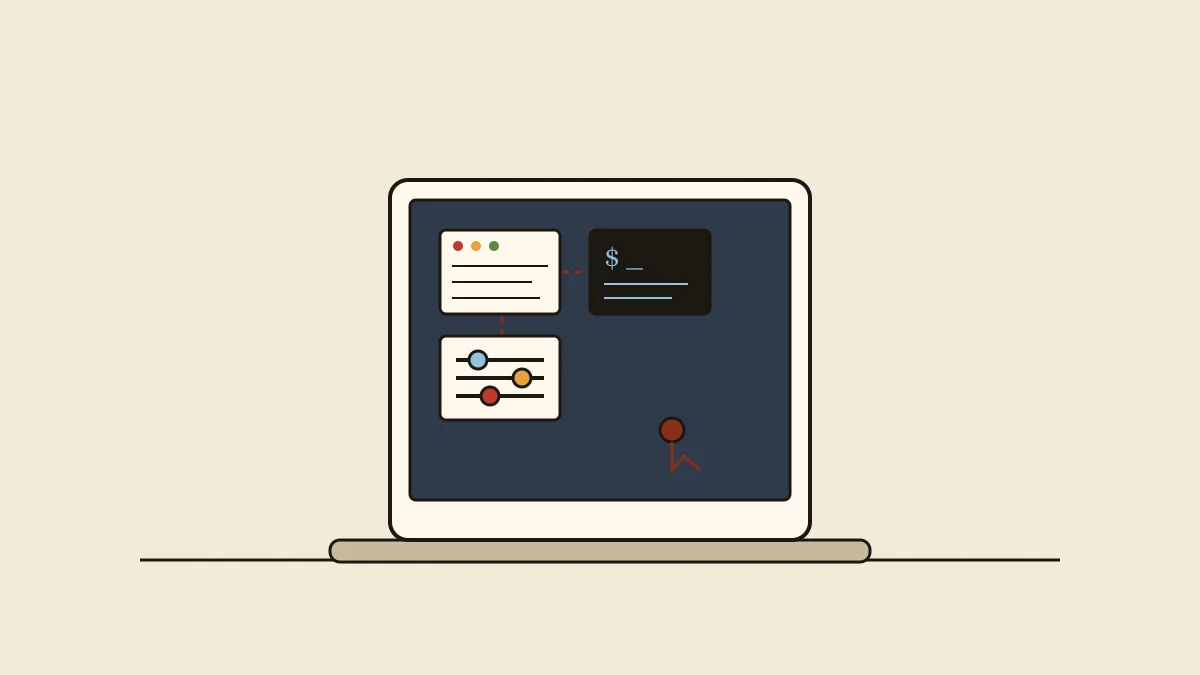
Apple wants to build an AI agent that can operate a computer the way a person does. A job listing posted this week, first reported by Bloomberg, seeks a senior engineering manager to lead work on software that browses the web, moves between applications, runs commands, writes and debugs code, and calls services on a user's behalf. The listing asks candidates to imagine an agent that picks the right tool for each step of a task, doing all of it privately and with what Apple calls the polish people expect from the company.
The posting describes people as already doing their most valuable work by moving fluidly between a browser, a document, a terminal, and an editor. Apple's agents, it says, would plan and carry out multi-step tasks across apps, command lines, code, and APIs, coordinating specialized sub-agents along the way. The hire would sit across three divisions: Siri, UI Frameworks, and Apple Foundation Models.
Playing catch-up in a crowded field
Every major lab already ships something similar. Meta's Muse, OpenAI's Dots, Anthropic's Duet, and Google's Tasks all operate computers through desktop apps, and Google recently extended that ability to Gemini. Perplexity and ChatGPT can seize control of a Mac today. Regulators have already started asking what happens when these agents misfire, and one bank has told customers that mistakes made by an AI agent are the customer's problem.
Apple entered this race late and visibly behind. Its AI-upgraded Siri began rolling out in September, able to answer questions about what is on screen and perform actions across a handful of apps. Bloomberg reports the company plans to push Siri further, with candidate features including rotating and cropping images in Photos and organizing Safari tabs. A Developer Preview arriving with iOS 27.3 will also let outside developers integrate Siri AI into all of their apps.
Locking the doors behind it
The same Bloomberg report describes a second, quieter move. While Apple builds its own agent, it is making it harder for everyone else's to take full control of a Mac. The upcoming macOS 27.3 will show warnings that discourage users from granting total access to third-party agents. In October, Apple told developers it planned to introduce additional controls so that only explicit user action could hand an app what it called an extraordinary level of access.
That combination, a first-party agent plus tighter gates for rivals, mirrors the playbook Apple has used in other categories, and rivals have complained about it before regulators in Europe and Asia. TechCrunch notes the company is pushing the agent push under the John Ternus era, as Apple tries to broaden an AI portfolio that reviewers have scored as lagging.
Bloomberg's reporting says Apple has eyed introducing the service as soon as the end of next year, but that progress remains in an early stage. The job listing, which TechCrunch confirms Apple has not expanded on publicly, gives no timeline and no product name. For now the company is hiring the person who would decide both.
What it means for the Mac
If the agent ships as described, the Mac becomes the fourth major computing platform where an operating system vendor's own agent sits above third-party ones. Microsoft has already reorganized engineering teams around that assumption, telling 60,000 employees their roles would shift toward directing automated systems. Apple's difference is the privacy pitch: the listing stresses on-device operation and private handling as a selling point none of the current agent makers lead with.
The practical questions are the ones every lab is still answering. What does an agent do when a website changes its layout, when a payment needs confirmation, or when two apps disagree about who holds a permission? Apple's answer, so far, is a job posting.