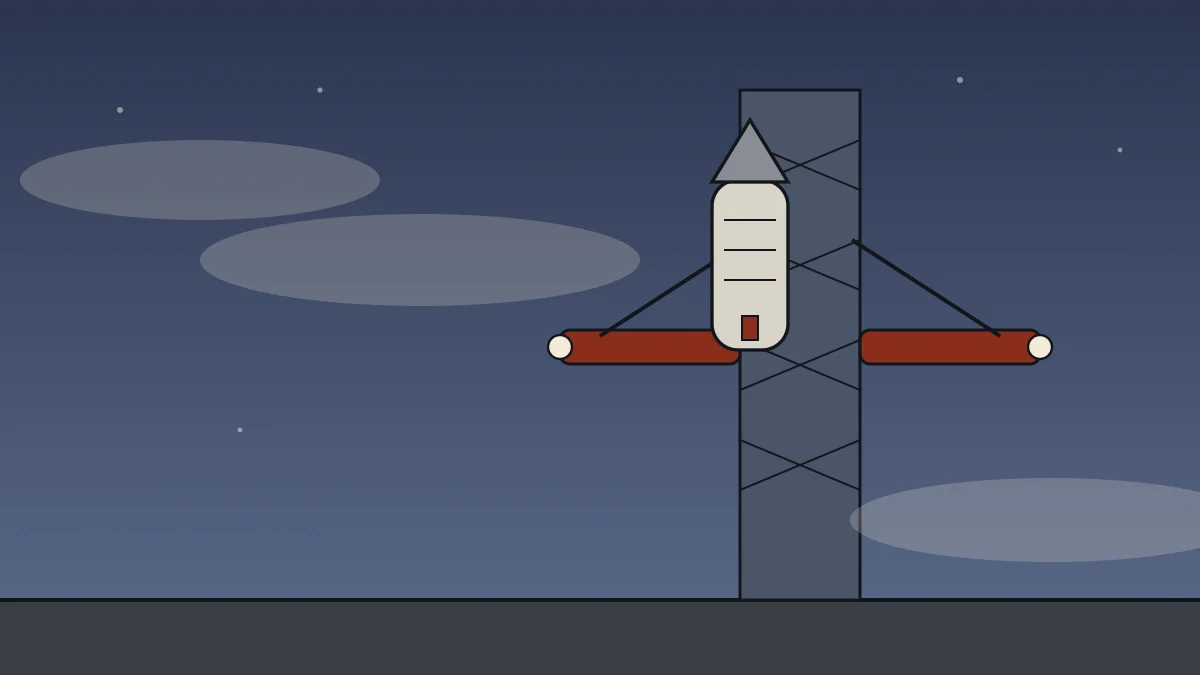
SpaceX caught the upper stage of its Starship rocket with the mechanical arms of its launch tower on Saturday, the first time the company has performed the maneuver on the ship itself. The catch happened at the Starbase, Texas facility at around 4:20 PM ET, with the vehicle flipping vertical and sliding between the tower arms after its descent through the clouds, a maneuver The Verge called surprisingly graceful in its writeup of the stream.
It was a split verdict for Test Flight 15, the most ambitious Starship test the company has attempted. The launch on Friday went smoothly enough, but the planned booster catch was aborted and the booster instead diverted to an offshore splashdown, where it detonated over the Gulf of Mexico before reaching the water. SpaceX is still working out what caused that failure. The upper stage continued to orbit, circled Earth 14 times, and then came home to a tower nicknamed Mechazilla.
A split outcome on Flight 15
Booster catches are old news for this program. The company has repeatedly caught the Super Heavy booster with the tower arms on earlier flights, which is why the failure to recover this one was not treated as fatal. What makes the moment unusual is that both stages were targeted at once. CNBC notes Flight 15 was the first time the company attempted to catch the booster and the upper stage in the same mission. The ship, though, had always ended its test flights over ocean. This flight was the first time the catching maneuver succeeded on the Starship vehicle at all.
Elon Musk had hedged before the attempt. "Success is not guaranteed on these first flights, but I'd say it's more likely than not that this succeeds next flight," he said during the company's third-quarter earnings call. After the capture, he posted video on X inspecting the recovered craft.
Why catching the ship matters
Reusing the upper stage changes the economics of the whole program. Starship is central to expanding the Starlink satellite internet service, which is SpaceX's profit center today, and to the computing ambitions the company has laid out for 2027. During the same flight the company released 26 of its newest Starlink v3 satellites into orbit, and the constellation already exceeds 11,000 satellites in low Earth orbit. A single Starship can carry up to 60 of the v3 satellites, so a fully reusable launcher that comes home to the pad rather than the sea shortens the turnaround between missions.
The same vehicle is slated to carry NASA astronauts and cargo between lunar orbit and the Moon's surface. Musk's longer-term pitch, "making humanity multi-planetary," depends on it too. None of that works at scale if every ship is expended.
What went wrong with the booster
The flight also caused temporary disruption beyond Texas. Hawaii's transportation department paused some West Coast flights on Friday over debris risk, and the FAA separately issued a nationwide ground stop the same day after its own telecom systems failed. Both orders have since been lifted, and the FAA stop had a different root cause entirely, as we covered when the outage grounded every US flight.
For SpaceX the immediate work is diagnostic. The company has not said whether the booster abort traced to hardware, software, or a decision made in flight control. The pattern of the program suggests the fix will be quick by aerospace standards, since the booster variant of the catch has succeeded repeatedly. The ship-side milestone, though, is the one the program has chased for years, and Saturday was the first time it landed.