Europe's build targets sit in the same piece as a contrast, not as the reason for the Finnish order. The article cites a $30 billion European investment and a goal of 100,000 AI GPUs at a site, plus SoftBank's $87 billion plan for France and its nuclear grid. Denmark's paused connections, at 60 gigawatts of requests against about 7 gigawatts of peak demand, and Amazon's waits of up to seven years, are electricity stories. Muilu's notice is a tree-and-soil story. Google can still measure and survey. It cannot keep clearing.
The agency's list of banned work is specific: trees, topsoil, excavation, quarrying, crushing, moving masses of soil, ditching, roads, and storage yards. What it still allows is planning, measuring, and soil surveys, if the impact stays small. Muilu's statement ties that list to the purpose of an environmental assessment: name the change before you make it. Google's spokesperson did not dispute the order in the quotes Tom's Hardware carries. The company said it fell short, that it had relied on the Forestry Act, and that planting on 130 hectares at Muhos is part of the work it still intends to do. Kajaani is the second site on the same notice. The power-connection delays in Denmark and at Amazon's European projects are in the piece as contrast. This stop is about the ground, not the grid.
The 130 hectares of planting Google described is a restoration plan at Muhos. It is not a claim that the assessment is done. Kajaani remains on the same stop notice.
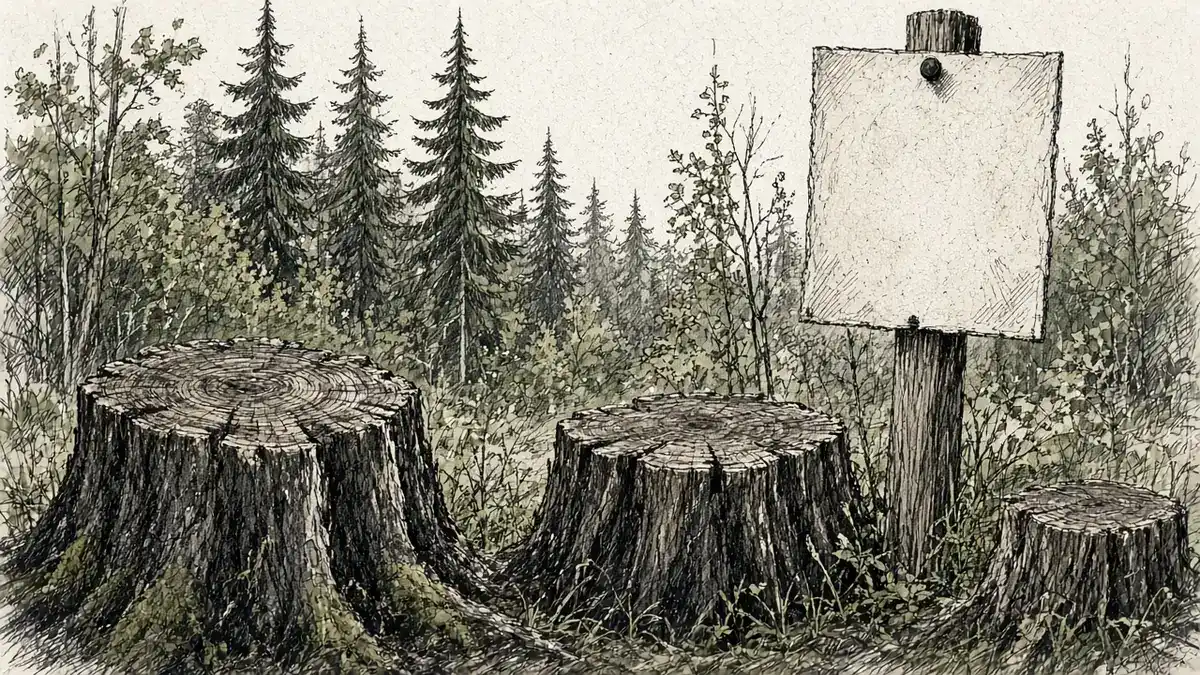
Finland's Licensing and Supervision Agency, the LVV, has ordered Google subsidiary Tuike Finland Oy to stop construction on two data centers. Tom's Hardware, citing CNBC, says the sites at Muhos and Kajaani cannot go forward until environmental impact assessments are done. The investigation is into the clearing of over 740 acres of forest. A Google spokesperson told the publication the company understands the concerns and has "fallen short of our own high standards in this instance."
Google's reply admits a miss
Google said it acted in good faith under the Forestry Act, ran nature surveys, and tried to protect high-value areas. It said biodiversity work continues, including tree planting across 130 hectares at Muhos. The earlier report on this site put the Muhos clearing at more than 300 hectares, cut before the assessment. This order is the agency telling the subsidiary to stop, and it names a second town, Kajaani, alongside Muhos.
The order lists what has to stop
LVV told Tuike to stop removing trees and topsoil, and to stop excavation, quarrying, crushing, moving soil, ditching, and building roads and storage. Tommi Muilu, head of the agency's environmental department, said those steps will change the environment, and that identifying and assessing that change is the point of the EIA. Planning, measurement, and soil surveys can continue if the impact is minimal. The stop is not about the power hookup. Tom's Hardware separates it from the grid fights elsewhere in Europe.
Denmark's queue is a different problem
Denmark has paused new data-center connection requests after demand hit 60 gigawatts, more than eight times the country's peak consumption of about 7 gigawatts. Amazon projects on the continent face waits of up to seven years for connections. Europe's own build, in the same piece, is a $30 billion investment and a target of 100,000 AI GPUs per site. SoftBank plans $87 billion in France, tied to nuclear power. Finland gets called the Texas of Europe in the article because land and electricity have been available. American towns blocked $68 billion of projects in the second quarter of 2026. Europe's own tally of delayed and cancelled centers is about $42 billion. Muilu's order is about trees and soil, not about a substation.
Planting 130 hectares is not the stop order
The 740 acres is the clearing this story says is under investigation. The 130 hectares is the planting Google says it will do at Muhos. The two towns on the order are Muhos and Kajaani. Surveys and measurements are what the agency still allows.