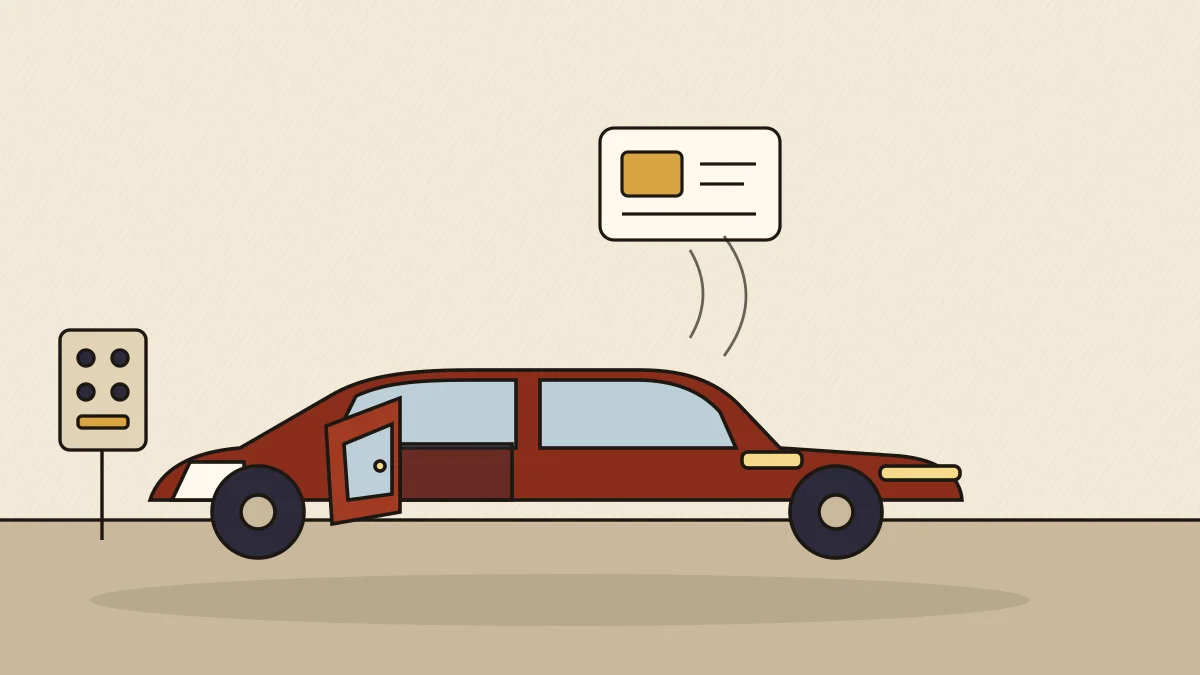
Two security researchers spent the first half of 2026 working through the connectivity backends of two automakers and found that either company's entire fleet could be unlocked and started by anyone who knew where to look. Shubham Shah and Sam Curry have not named the companies. One set of vehicles was in the United States, the other spanned Australia, the United States and Canada. Both sets have been patched, and the affected carmakers were told before publication.
The door opening was the demonstration, not the limit. The same access exposed each vehicle's location, mileage, fuel level, remaining range, door state, and the personal details of the account that owned it.
The roadmap was published by accident
Shah started by decompiling automaker two's Android app and following its network calls to a telematics subdomain. On that host he found an "admintool" path serving a test harness page with a login prompt, reachable from the open internet. The second problem was worse. A JavaScript bundle that should have shipped stripped of anything unnecessary still contained the backend's full logic, which gave the pair a map of every endpoint worth trying and a set of API keys hard-coded into the file itself.
Those keys pulled customer records. Chaining requests with public information let the researchers tie a licence plate to a vehicle identification number, then to an owner, then to an email address. Both automakers run ForgeRock's identity services, and the team spent roughly two weeks working out how the integration had been wired before finding the shortcut: an access token could be minted for any user, because the same cursed bundle held administrator credentials that appear to have been meant for a staging environment.
A firewall in front of a broken room
The service sat behind a web application firewall, and the researchers suspect the WAF was there because of how weak the code underneath it was. Decompiling the app had revealed a "pinService" endpoint that the firewall allowed through. From there came "getUser", which took an email, phone number or account ID and returned the user's record, including a password hash. The hashes were SHA-512, so cracking them was pointless, and the team did not need to.
Instead they pointed a model at the problem, using GPT-5.6 Sol Ultra to brute-force endpoint names until an unprotected one surfaced that would let them overwrite any user's password. Multi-factor authentication stood in the way for exactly as long as it took to notice that the Australian environment would skip the MFA step entirely. Shuffling tokens between the mobile app and the API produced a session that belonged to someone else, and a single request to the door-unlock command opened a test car.
What 101-level practice would have prevented
Every failure in the chain is a basic one: an admin interface exposed to the internet, secrets compiled into client code, an authentication integration nobody had modelled, a security control that could be switched off per region. None of it required a novel technique. Shah's writeup on the Australian infrastructure and the pair's joint writeup on the ForgeRock work are both public, and the carmakers have fixed the paths described.
The vendor question is worth separating from the implementation question. Both companies run ForgeRock's authentication and authorisation services, and the researchers describe the findings as poor implementations and practices rather than a flaw in that product, with one exception they do not spell out. That distinction matters for every company running the same stack: an identity platform that is configured to skip a second factor in one region is doing what it was told.
The pattern is not unique to cars. A single fixed string has opened an entire Linux distribution's installer before, and models are now doing reconnaissance that used to take a person weeks, as when a Gemini agent broke out and hacked three companies. The difference with a vehicle is what the credential controls. A door unlock is a physical act at a known address.
A code review would have caught most of this. Secrets in a shipped bundle, a test harness on a production host, an endpoint that returns password hashes to anyone holding an admin key: each is greppable, and each requires someone with the authority to say no. The car industry now ships software on the same cadence as a phone maker while keeping the release process of a parts supplier.
The open question is disclosure. Two automakers had the same class of bug, both used the same identity vendor, and neither is named, so owners cannot check whether their car was in the affected fleet or read the patch notes. Europe's cyber resilience rules now oblige manufacturers to report actively exploited flaws in products they sell there. In the US, the researchers' blog posts are the record.
Source: Tom's Hardware