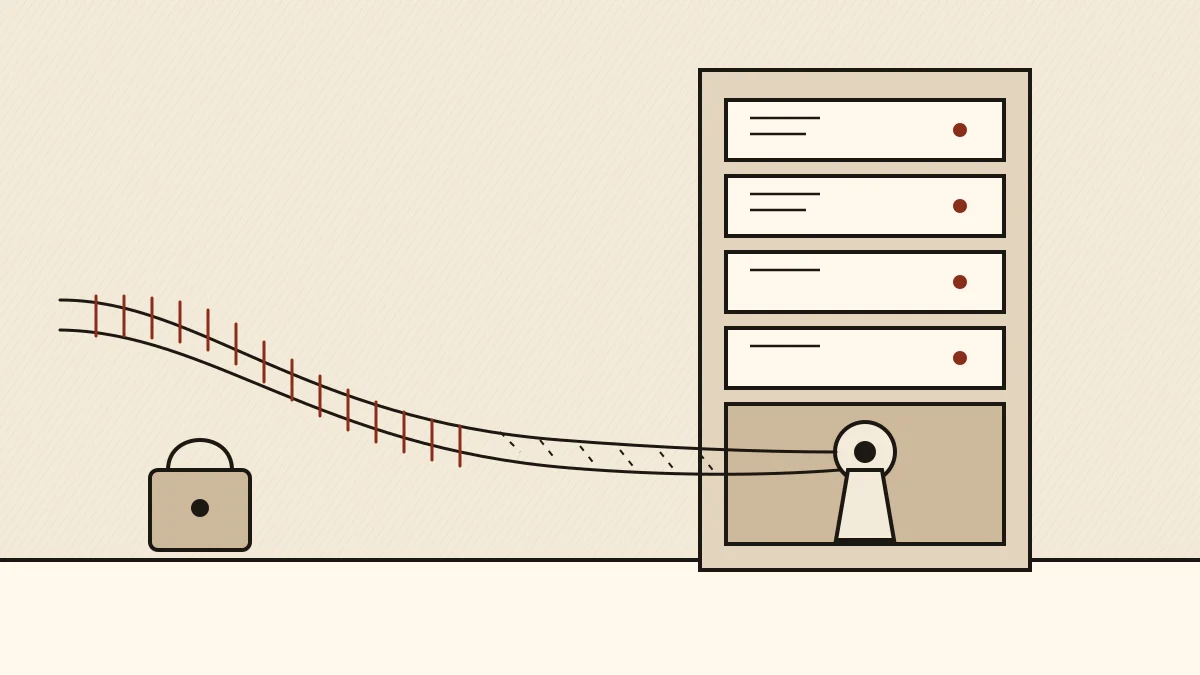
Type more than 256 characters at an SSH password prompt on an affected Alpine Linux host and you are let in, whether or not you know any password. The bug is the combination of a flaw in OpenSSH and a flaw in musl libc, and both projects published fixes and advisories this week.
The conditions are narrow on paper and common in practice. Password authentication has to be enabled rather than explicitly disabled, the system must not be using PAM, and it needs a user account with a password hash set in the SHA-512/256 format. Alpine ships with those conditions satisfied.
Tom's Hardware reported the pair of advisories, which is how most administrators will hear about this before their scanners do.
Two correct-looking decisions make one wrong one
The mechanism is a disagreement about what an error looks like. In /etc/shadow, an asterisk in the password field means no password should ever work. When musl's crypt() hits an error, it returns "*" rather than a null value, which is not what the usual convention expects. OpenSSH then takes that string and compares it against the supplied password as though it were a real hash.
A sufficiently long input pushes the comparison into a path where the check succeeds. The flaw is not in either project's logic taken alone; it is in the contract between them, which is why both sides can reasonably describe the other as responsible and why both shipped a patch anyway.
Affected builds include Alpine, OpenWRT when OpenSSH is installed in place of Dropbear, Buildroot, Yocto and Void Linux. Alpine is the one that matters at scale. It is the default base image for an enormous number of Docker, Kubernetes and Proxmox containers, plus a long tail of servers, cloud instances and embedded devices.
The blast radius is inside your network, not the internet
Most Alpine installs are not reachable from outside. That limits the damage without making it small. Anyone already inside a corporate network, a home lab, a cloud VPC or a VPN can use the flaw, and scanning for it is trivial once you know the version numbers.
One valid low-privilege account is enough to become the starting point. That pattern is familiar from this month's Teams intrusion, which began with a phone call to a help desk and did not need a software flaw at all. The difference here is that the second step requires no social engineering.
The mitigation is one line. Set PasswordAuthentication no in the OpenSSH configuration, restart the service, and the bypass has nothing to authenticate against. For anything that cannot move to keys today, patching musl and OpenSSH is the other half of the fix, and both are already available.
Anyone running container images built before this week should check whether those images start sshd at all. A base image that never enables the daemon is not exposed no matter which libc it carries, and that distinction is worth more than a version scan when the count runs into the thousands.
The comparison worth keeping in mind is the worm Anthropic built to copy model weights onto cheap hardware. That one needed a researcher to demonstrate it. This one needs a keyboard and thirty seconds.