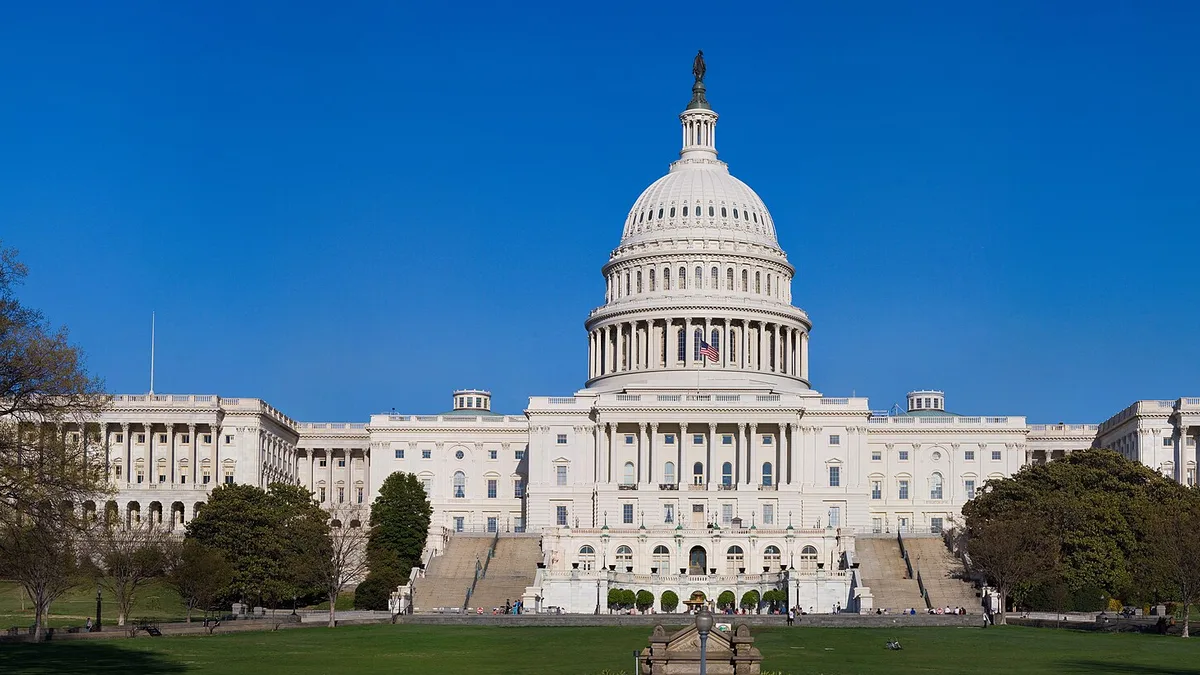
A Republican bill in Congress would let rightsholders obtain court orders forcing internet providers, DNS services, and VPN companies to block foreign piracy sites. Site-blocking is Hollywood's oldest ask of the access layer. Pulling resolvers and VPN operators into the same order is the part that is new.
The available account does not name the sponsors, the penalties, or where the draft sits in committee. What it names is the mechanism. Courts. Rightsholders. The companies that stand between users and those sites.
ISP blocks leaked. This draft tries to close the leaks.
British courts have ordered ISPs to block pirate sites since the early 2010s. Australia wrote a scheme into statute in 2015. Several EU countries run similar lists. The pattern is stable: a rightsholder sues, a court lists domains, access providers stop resolving them, and the operators change domains.
Washington never adopted a general filter of that type. SOPA and PIPA tried in 2011 and 2012 and died after a blackout protest the industry still remembers. The argument moved. Domain seizures in criminal cases, DMCA pressure on U.S. hosts, advertising and payment cutoffs: those stayed. DNS-level blocking of foreign sites kept coming back, usually wrapped in "foreign" to keep the First Amendment fight narrower.
Encrypted DNS and consumer VPNs grew up in the same decade for reasons that had nothing to do with movies. Snowden. ISP advertising. School filters. Travel. Those tools are also how a determined user walks around a block list. That is why an ISP-only proposal looks incomplete to studios, and why a VPN mandate looks like a filter to anyone who bought a tunnel to get off a filtered path.
Ars Technica's report is why the third category is in the conversation this week. An ISP-only bill would have been a rerun. Ordering a VPN to start filtering is a different demand than asking a cable company to sinkhole a domain. I think privacy groups are right to treat that clause as the actual fight. Rightsholders will call it closing a loophole. Both can be true. Only one of those readings should scare you if you pay for a VPN so your ISP cannot watch.
What a user would actually see
Missing pages. A domain that loads on a phone using cellular DNS and fails on home broadband. A resolver error where a stream used to be. Innocent reverse proxies get swept when lists move faster than hearings. Circumvention stays trivial for anyone willing to switch resolvers or use a provider outside the order. That is not a defense of infringement. It is a description of how the internet is built.
DNS companies such as the recursive resolvers people actually type into a router sit in an awkward middle. They are directories, not last-mile plants. A court order that treats them like cable headends will hit privacy-oriented projects as well as Google and Cloudflare. Small operators will comply badly or leave the U.S. market. Neither outcome helps a studio collect a rental.
Hardware and appliance stories on this site keep circling the same question: who is allowed to sit between you and a file. Valve's Steam Frame mediates a game library. Tovala mediates a meal. This bill would mediate a hostname. The difference is a court, not a scan code.
I do not buy the it only targets foreign pirates comfort. The user experience of a blocked domain does not change based on where the server sits. Critics will still call it a web filter because that is what it feels like. Sponsors will still say foreign because that is how they keep the constitutional argument contained.
Read the text before anyone cheers
Start with the bill text, not the talking point. Definitions of "foreign piracy site." The standard a judge would apply. Whether VPN and DNS firms get a hearing before an order lands. Without those lines this is a description of a mechanism, not a statute.
Watch the committee calendar. A hearing would force sponsors to say whether they intend a UK-style list or something broader. Watch for a rewrite that drops VPNs to make the rest passable. Blocking bills survive in Washington by shedding the clause that made the last version radioactive.
Waymo's Singapore permits at least have a year attached. This draft has a theory of intermediaries and no public scoreboard. If it moves, blocking duties land on a much wider pipe than Hollywood usually gets. If it stalls, the ask will be back next Congress, thinner and easier to pass. Either way, treat a VPN mandate as the line, not a rounding error in a copyright bill.