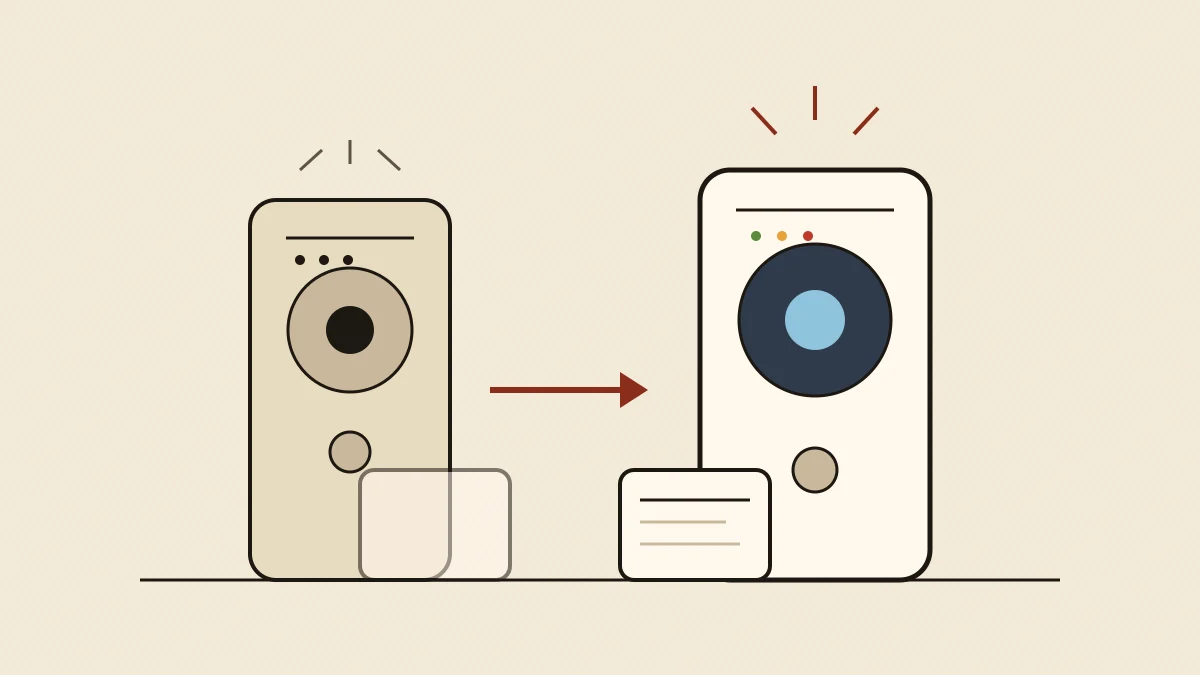
Google has put dates on two long-expected retirements. The Nest app will stop working on January 25, 2027, and Google Assistant will leave smart speakers and smart displays on August 2, 2027, replaced by Gemini for Home. Both dates were confirmed by Google to CNET, which published the transition details alongside The Verge's report.
The Nest app has been the control surface for thermostats, cameras, doorbells and Nest Protect smoke alarms since before Google bought the company. From January 25 those devices are managed in the Google Home app instead. Google says it will move devices and camera video history across automatically on that date, and that first-generation Nest Aware subscriptions will become Google Home Premium without a gap in coverage.
What moves, and what does not
According to CNET, Google says every device supported today works with the new setup, including locks and smoke detectors, and existing schedules and settings should carry over on their own. The Home app also runs on more surfaces than the Nest app did: iOS and Android widgets, the Home Panel on Android, smart displays, speakers, televisions through Google TV streamers, and a browser page at home.google.com. Live camera views and thermostat changes can be made from a TV or a watch.
Two things will not follow. Anyone who saved custom clips on home.nest.com has to download them before January 25, because manually saved clips are not part of the video history that transfers. And Nest accounts have to be migrated to Google accounts, since Google says it will begin deleting Nest account data on March 25, 2027.
Google is pointing people at a Nest App Transition Support Hub with step-by-step instructions, though for most households the work amounts to installing the Home app and signing in.
Assistant gives way to Gemini
The voice change comes later and matters more for how these devices behave. On August 2, Gemini for Home replaces Google Assistant on speakers and displays. Google's argument is capability: Assistant answers set questions, while Gemini handles follow-ups, conversational context and multi-step requests without a fixed command phrase.
That Assistant was going to be retired in the home was not really in question. Google killed Assistant on phones earlier this year, and announced Gemini for Home in 2025. The company says it will share more about the transition before August.
For owners, the practical question is whether a device bought for one assistant keeps its useful habits under another. Timers, broadcasts, music control and routines are the functions people actually use daily, and they depend on Google keeping the old commands working inside the new model. Google has not published a list of which ones survive.
A quiet consolidation with a security pitch
The consolidation also folds in the argument that a single app is easier to defend. Google says the Home app brings updated account security, privacy controls and threat protections, a point that lands differently in a year when large platform outages have become routine and connected cameras keep raising questions about who can see the footage.
There is a cost to that logic. One app for every device means one account holding the keys to a house full of sensors, and Google's own timeline shows how final these migrations are: the Nest app does not get a read-only mode, and the account data has a deletion date. Households that want to keep their recordings have roughly two months to download them.