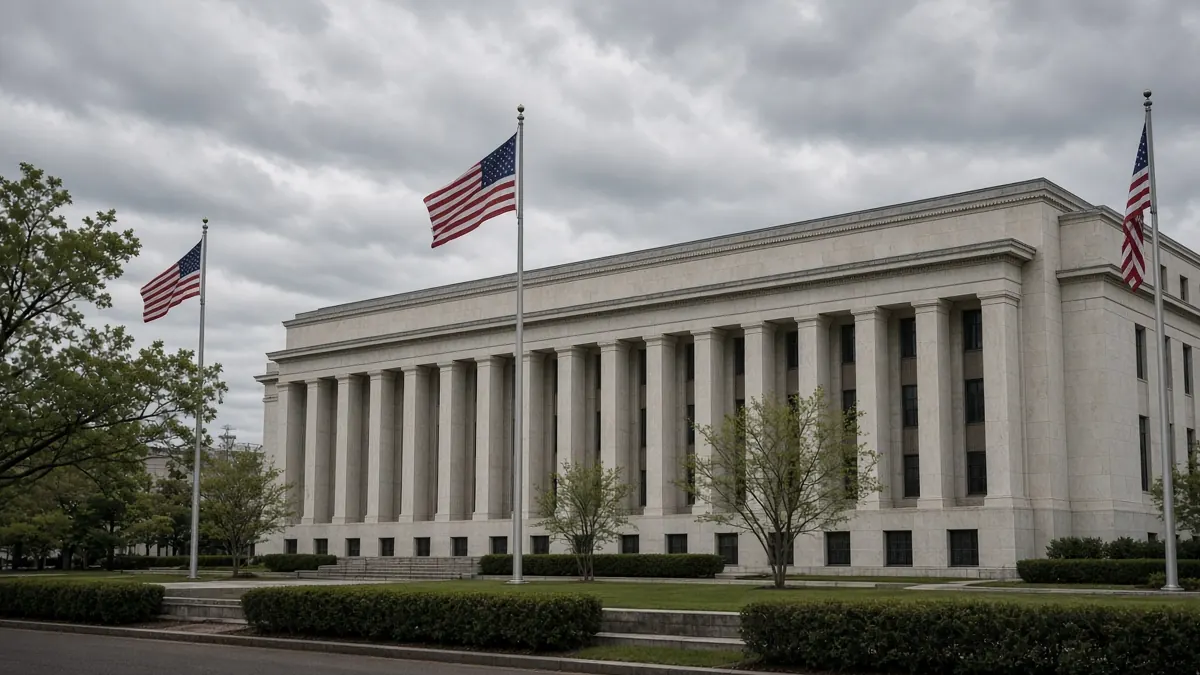
The Federal Reserve raised its benchmark interest rate on Wednesday for the first time since 2023, acting to contain inflation that has remained above the central bank's 2 percent target. It was the first policy shift under Chair Kevin Warsh, who took office in late May after President Donald Trump selected him with an expectation that he would cut rates. The committee tightened instead.
Officials presented the decision as a bid to quell inflation that has stayed stubbornly high. Bringing prices back to the 2 percent goal remains the stated objective. Economists said those inflation pressures are not hitting Canada in quite the same way. The U.S. price problem that drove Wednesday's hike is not fully shared north of the border.
Warsh's first move went the wrong way for the White House
Warsh arrived at the Fed after a selection that assumed he would deliver lower borrowing costs. The first decision of his tenure went the other direction. That gap between the expectation of cuts and the choice to raise rates now defines the start of the chairmanship.
Trump wanted cheaper money. Households with floating-rate debt, and companies that refinance on a schedule, just got the opposite signal. I would not treat this as a one-off tantrum from a new chair trying to look independent. The Fed tied the tightening to inflation that has not receded as hoped. Until that 2 percent target is in reach, the political story and the price story are going to fight in public.
Canadian readers should not shrug. A tighter Fed still moves the U.S. dollar, still moves import prices, still moves the mood in credit markets that Canadian firms tap. It does not mean Ottawa has to copy the hike. It means the spillover is real even if the CPI print is not identical.
Three quiet years, then a hike into a split economy
The 2022-2023 tightening cycle took U.S. policy rates from emergency lows to a multi-decade high as the Fed chased inflation after the pandemic reopening and the energy shock. Officials then spent a long stretch on hold, and later on cuts, while they waited to see whether prices would settle near 2 percent. Wednesday ended that pause. It was the first increase in three years.
Warsh is not a stranger to the building. He sat on the Board of Governors from 2006 to 2011, through the financial crisis, then spent years as a critic of later policy from the outside. His return in late May was sold in Washington as a turn toward easier money. The first meeting that mattered did not deliver that turn.
Canada ran a related but not identical path: a sharp hiking cycle under the Bank of Canada, then a different inflation mix, with housing and shelter doing more of the work. That is the basis for the economists' claim that Wednesday's U.S. problem is not fully shared. Diesel at record levels is already a separate U.S. cost shock moving through freight. It is one more reason the Fed can argue prices are not done, even if Canada does not feel the same diesel print the same way.
What a tighter Fed does to Canadian borrowers anyway
CBC News Money reported the hike as the first since 2023 and carried the Warsh-versus-Trump contrast as the political frame. The truncated statement language in that account also said the central bank signalled more. Do not invent a dot plot from that. Do treat "signalled" as a warning that Wednesday was not framed as a one-and-done.
Mortgage shoppers in Canada still live off Bank of Canada settings and their lender's posted rates. They should not wait for Warsh to set a five-year term. They should watch the currency and the next Bank of Canada decision for whether Ottawa treats this as a reason to stay on hold, or as imported tightness. U.S. credit-card APRs and auto loans will reprice faster than Canadian mortgages. That is the practical split.
Equity traders already started arguing about the next session. Stocks bounced a day after the move in the same week's tape, which is a timing story, not a verdict that inflation is beaten. A rebound does not refinance your variable loan.
Plant-level fights at home, including Unifor's push to keep Stellantis in Brampton, will now sit next to a more expensive dollar-funding backdrop. That is not why the Fed hiked. It is what a hike does when it leaks across a border. Warsh was hired to cut. He raised. Until inflation is actually at 2 percent, that is the job he has decided to do.