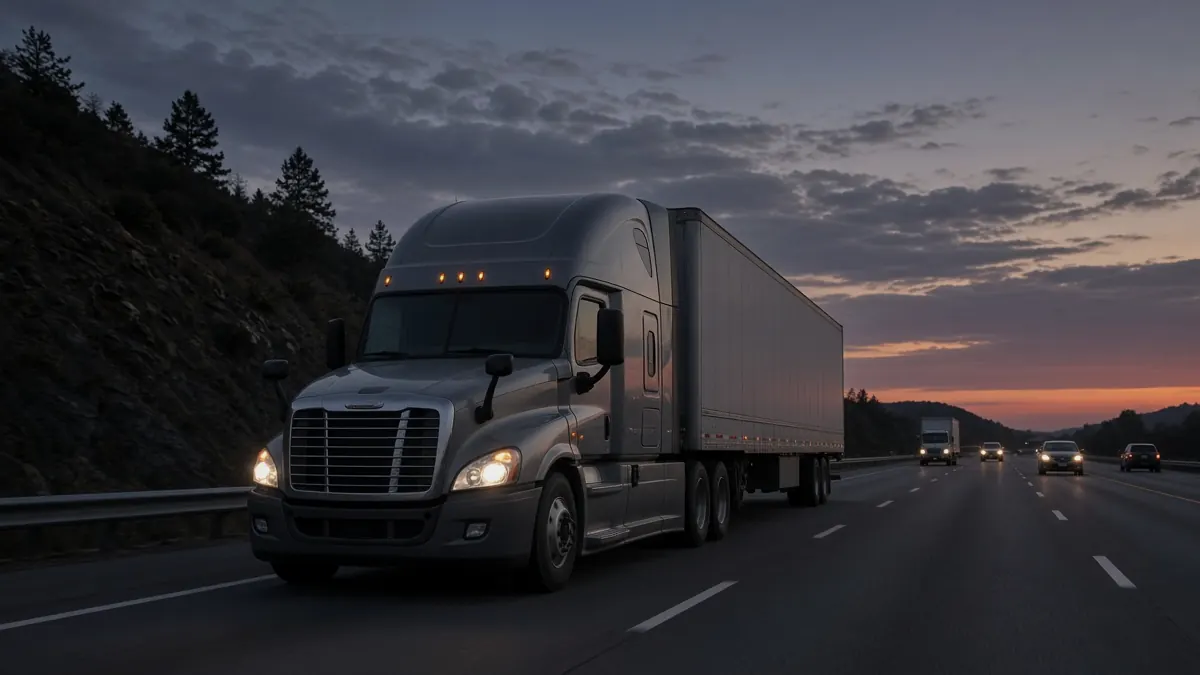
Record diesel prices are already pounding U.S. trucking and railroads. The fuel that moves freight just set a high, and haulers pay it on every mile. Those bills work into shipping rates when contracts allow. They work into thinner margins when they do not.
If the spike lasts, warehouses and manufacturers that live on that freight take the next hit, then retailers. The title of the shock is diesel. The pass-through is goods inflation with a lag. Transport is loud first because it buys the gallons directly.
Freight pays at the pump before anyone else
Class 8 trucks take freight from ports and farms. Diesel-electric locomotives still power most of the freight-rail network. A record at the terminal is a record in the cost of getting products onto shelves. Passenger cars in this country mostly burn gasoline, so the political temperature can miss the industrial fuel. The invoices do not miss it.
CNBC framed trucks and rails as only the start. That is the right sequence. Downstream firms feel it as contracts reset and surcharges appear. Households feel it last, in food and in anything that cannot be emailed.
The companion tape this week is the cash print transport firms have called science fiction. Use that record as the cost, not as color. Every loaded mile is more expensive today than the planning models assumed.
Rail is not a hedge. Networks that run diesel locomotives face the same cost curve. Fuel surcharges will try to push it into carload and intermodal bills. Where they stick, shippers pay. Where they fail, capacity and service get worse. Neither outcome is free for the rest of the economy.
2022 already taught this lesson
Diesel last ran U.S. economic coverage after Russia's 2022 invasion of Ukraine tightened global distillate. Gasoline got the campaign ads. Diesel got the freight bill. The two fuels can diverge. Distillate can stay painful after crude has already made a high.
Weekly EIA retail diesel is the public scoreboard shippers actually cite. They do not need it to know their own rack prices. They need it to win a surcharge argument with a customer who still thinks fuel is cheap. A record handle ends that argument.
Compared with Europe, where diesel cars once made the fuel a household political issue, the American problem is logistics. Harvest, packing, and store delivery are diesel-intensive even when oil headlines talk about jets. U.S. natural gas slipping as European prices sagged is a different molecule with the same moral: product markets, not the crude screen alone, set what industry pays.
Mining and bulk freight names such as Teck, which has already faded to chart support, sit in the same physical economy. If diesel stays at records, haulage costs will show up in commodity delivered prices as well as in Amazon boxes.
Assume pass-through unless the fuel cracks
Whether the hit stays in freight or bleeds into consumer prices depends on duration. A one-week record is an alarm for fleets. A month of records is an inflation input. Surcharges exist because they have been used before. They will be used again. Betting that transport absorbs a long wave alone is how 2022's freight spike became a shelf-price story.
Practical watch-list for operators: the next weekly diesel print, the language in trucking and rail updates about recovery versus absorption, and the diesel crack even if crude has a down day. A cheaper Brent contract that leaves distillate tight still leaves the grocery supply chain expensive.
Shoppers will not see a diesel line on a receipt. They will see it in fewer promotions and in stickier food prices if inventories turn over at the new freight cost. That lag is why this story is bigger than a truck-stop complaint. Grocers already know the pattern from 2022: fuel first, then the truck, then the pallet, then the shelf tag.
American Trucking Associations and the large railroads have spent the years since 2022 talking about drivers, insurance, and equipment. Fuel was supposed to be the line they could surcharge. Surcharges work until customers push back, or until the price moves faster than the clause. A record print is exactly that kind of speed.
Keep the sequence straight. Trucks and rails are in it now. Factories and warehouses are next if the price holds. Households are last, which is not the same as safe.