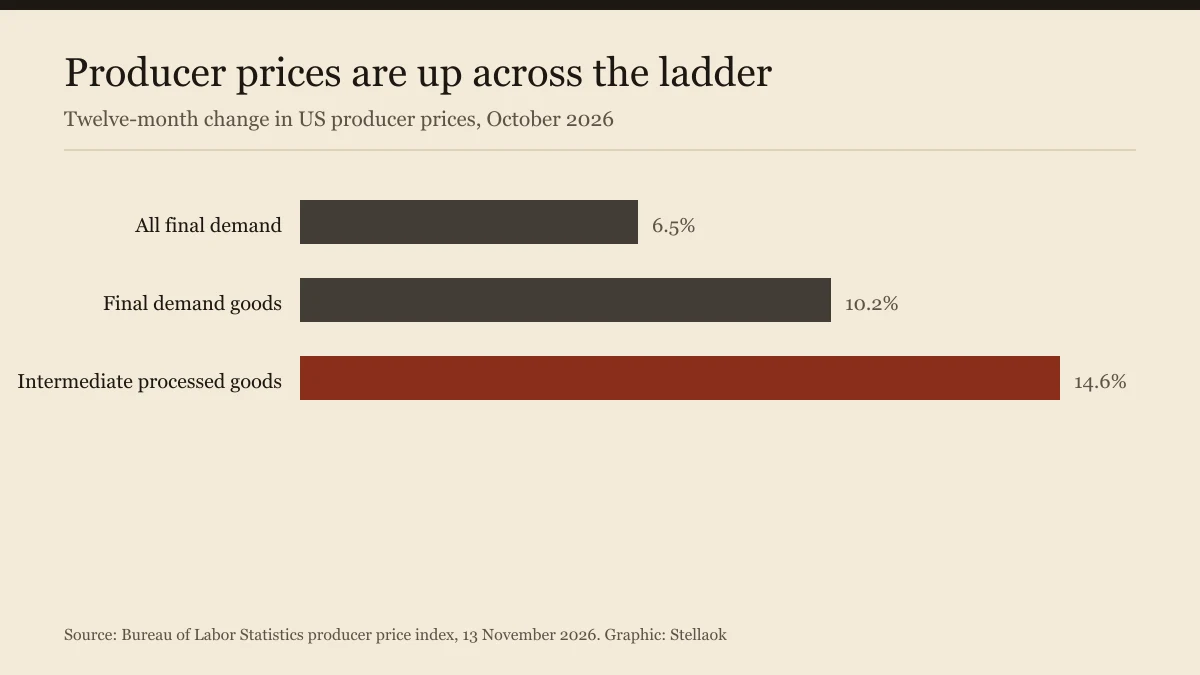
US producer prices rose 0.3 percent in October, below the 0.4 percent consensus but enough to push the annual rate to 6.5 percent, the highest since November 2022 and an increase of 0.2 percentage points from September. Core prices, which exclude food and energy, rose 0.3 percent on the month, matching expectations.
The producer price index measures what domestic producers are paid before goods reach the consumer, so it sits upstream of the numbers shoppers see. October's report shows those upstream costs are still climbing faster than the Federal Reserve's 2 percent target, and that the climb is broad.
Goods prices rose 0.5 percent for the month and 10.2 percent over twelve months, the biggest annual jump since October 2022. Services rose 0.2 percent, mostly from transportation and warehousing, including a 3.9 percent monthly gain in trucking freight. Strip out food, energy and trade services and the monthly increase was 0.5 percent, a cleaner read on the underlying trend than the headline.
Intermediate processed goods were up 14.6 percent from a year earlier, the most since July 2022. Intermediate services rose 6.9 percent, the sharpest since November 2022. Those are the inputs for the next round of finished goods, which is why they matter more than a single month's miss.
The Fed meets in three weeks
The report lands before the December 8 to 9 policy meeting, where markets fully price a quarter-point increase in the benchmark rate and assign slight odds to a half-point move. Stock futures added to gains after the release and Treasury yields were mixed.
The consumer price data published earlier in the week made the case stronger than the producer data did. Headline CPI rose 0.4 percent in October and core rose 0.3 percent, each a tenth above forecast. The Bureau of Labor Statistics did not publish a twelve-month CPI figure because the October 2025 shutdown left gaps in the collection.
Chicago Fed President Austan Goolsbee told CNBC the problem is not one number. "If you look at how broad-based the inflation is, it's not just that we're above the target and have been for some time," he said. "It's that in categories that are not driven by oil prices and not driven by tariffs, you're still seeing stalled progress and in some cases going the wrong way."
That distinction matters for policy. Central banks usually look past energy spikes and one-off tariff effects on the assumption that they fade. When prices rise in categories untouched by either, the assumption stops holding.
A report that will not change December
Chris Zaccarelli, chief investment officer at Northlight Asset Management, told CNBC the PPI print is unlikely to move the committee. "Today's PPI data, which shows some signs of improving, albeit still too-high, is unlikely to change the Fed's approach in December because the CPI data was already outside their comfort zone," he said.
The politics around the number are as relevant as the number. Goolsbee noted that inflation has been above target for almost six years, which covers two administrations and a rate cycle that markets spent most of this year expecting to end.
Households have already adjusted their expectations. A September survey found the consumer outlook index at 47.8 as inflation views darkened, and real pay went backward in August when inflation at 3.4 percent outpaced 3.1 percent wage growth. A producer rate of 6.5 percent suggests those squeezes have further to run before they ease.
The next test comes December 9, and the argument inside the committee will be about breadth rather than direction. If the categories Goolsbee flagged keep rising while oil and tariff effects fade, the Fed's room to describe this as temporary runs out at the same meeting.
Source: CNBC