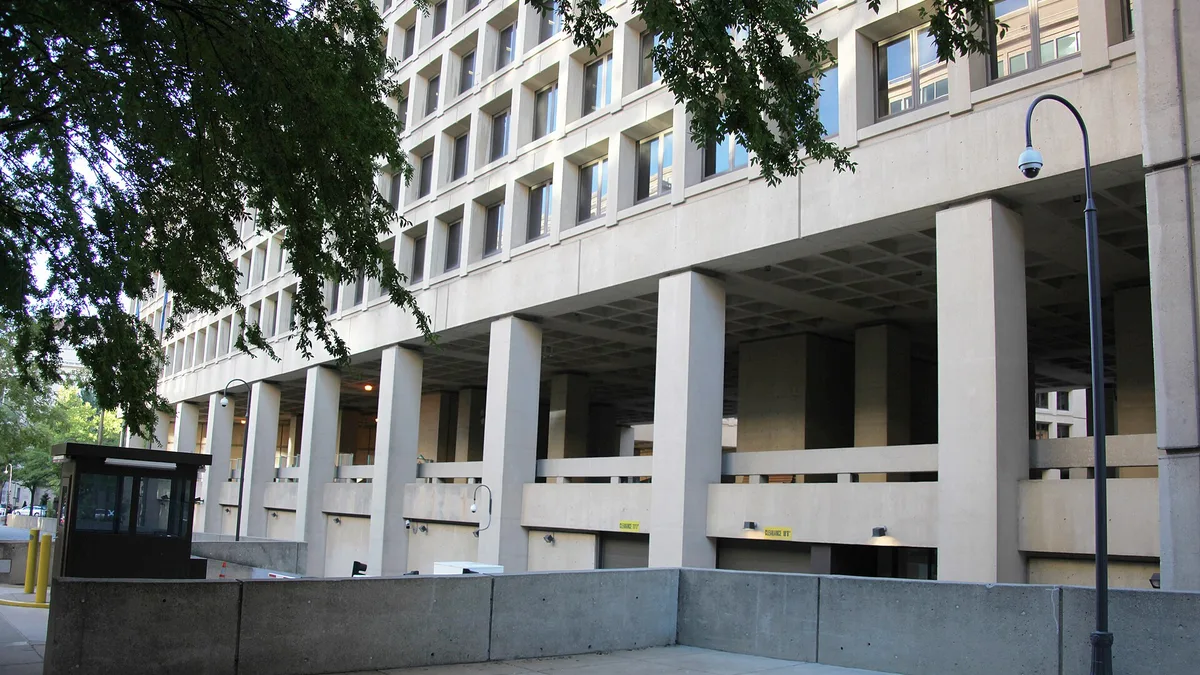
FBI director Kash Patel told Fox News that artificial intelligence use at the bureau has increased by 605% since he was sworn in, and that every major technology player is now embedded in the agency. He framed the technology as a triage tool, said it had been instrumental in following a lead that stopped a shooting in North Carolina, and credited it with similar results in half a dozen other states.
The 605% figure is the kind of number that travels well and checks badly. A percentage increase needs a starting point, and as Tom's Hardware noted in going looking for one, the bureau has never published it. Without a baseline, 605% could describe a jump from eight tools to fifty-six, or from a handful of pilot licences to an agency-wide rollout. Those are very different stories about a law enforcement agency's relationship with private models.
What the public record actually contains
There are a few documents that give the claim something to stand on. A February 2026 report on the Justice Department's AI use case inventory for 2025 attributes 50 cases to the FBI, nine of them marked high-impact. By August, the bureau's chief AI officer Katie Noyes put the number of approved use cases at 139, close to three times the January figure. That is real growth over roughly seven months, though it is growth in approved use cases rather than in usage, and it does not arrive anywhere near 605%.
The procurement trail is easier to read. The General Services Administration cleared Claude, Gemini and ChatGPT for federal use last year, which put frontier models inside agency networks without each agency negotiating separately. The Pentagon signed eight deals with AI companies in May. A few months ago the FBI posted a document asking vendors to bid on $88 million worth of AI servers, which is not the behaviour of an organisation winding down.
None of that makes 605% correct. It makes it unfalsifiable, which is a different problem.
"Embedded" is doing a lot of work in that sentence
The more interesting claim is the second one. At a Senate hearing on September 15, Patel said he can pick up the phone to the chief executive of any major AI company and that every one of them has complied with bureau requests on law enforcement matters. He argued that access to vendors' models would make it easier to pursue AI-assisted crime, on the grounds that criminal operations are building their own models with help from distillation attacks.
That is a describable relationship and a checkable one, and it sits awkwardly next to how the same companies talk publicly about government access. It also matches what security teams keep finding in the private sector, where Cisco says unsanctioned AI agents are already running on most networks it looks at. Institutional adoption runs ahead of institutional accounting almost everywhere. A federal agency is not exempt.
The bureau has at least started classifying AI-related crime under its own descriptor, and its most recent Internet Crime Report flags investment fraud, romance scams and fake employment offers as the common categories.
The claims that come with actual numbers
Patel has been more specific in writing than on television. In an op-ed last May he attributed a 30% increase in locating missing children and a 20% rise in child abuse arrests to AI tools including facial recognition, and described new systems that transcribe calls, produce short synopses, and correlate contacts across complaints. He noted that messages collected under a search warrant can take analysts weeks to process.
Those are the figures to press on, because they describe outcomes rather than adoption. Facial recognition in particular has a documented record of misidentification that a percentage increase in arrests does not address. A tool that clears a backlog faster is genuinely useful; a tool that generates leads from face matches carries a cost that shows up somewhere other than an arrest statistic.
The wider argument about who gets to set limits on this technology is being fought at a level far above the bureau, with the major labs now pushing for a deliberate slowdown while their customers accelerate. Federal law enforcement is one of the biggest of those customers. When the director says every major player is embedded in his agency, that is not a throwaway line about vendor relationships. It is a description of where the technology is already operating, several years before anyone agrees on the rules.