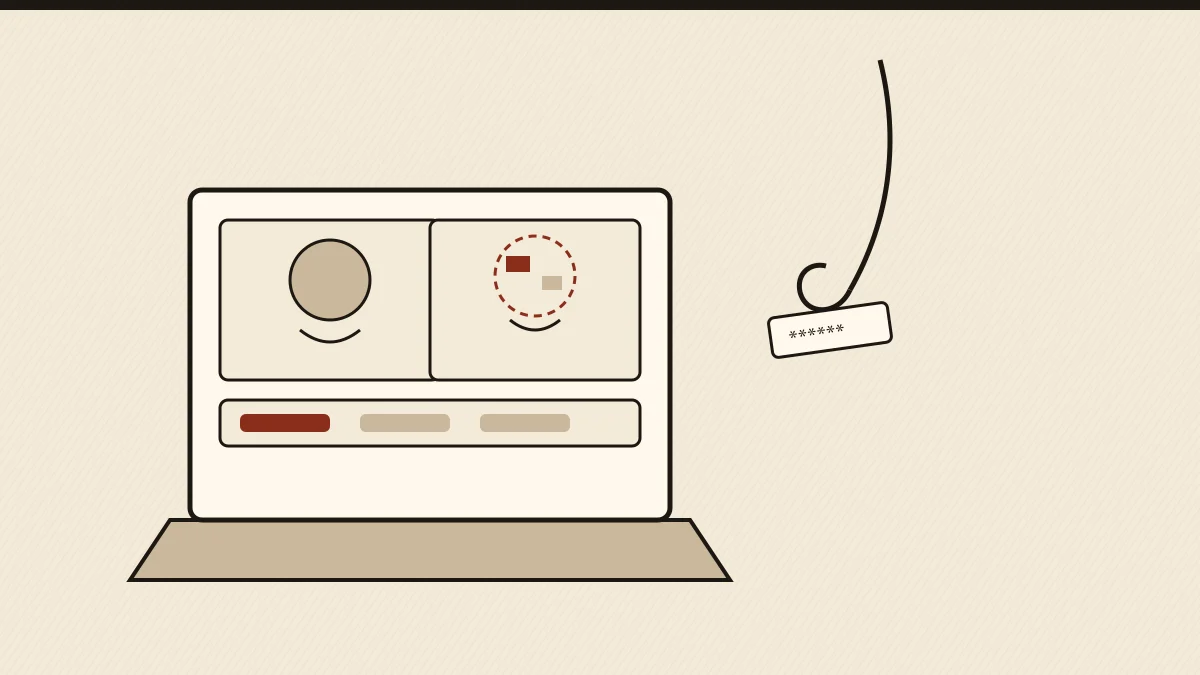
The social-engineering wave that drained about $400 million from individual victims and pulled off the multi-billion-dollar Binance heist finally has a name: FaceStealer. The FBI and the Justice Department put the label on the campaign this week and moved against its plumbing, seizing cloud infrastructure that, when the agency's technicians opened it up, contained nine hundred videos of the tech workers the operation had been recording for later impersonation. The DoJ's announcement attributes the campaign to North Korea and frames the seizures as disruption of a state funding operation, part of a broader crackdown on crypto crime.
How the scheme actually works
The FBI's report is the useful document here, and it describes a pipeline rather than a single trick. Operators first compromise a victim's communication apps, exfiltrate every conversation and contact list, and quietly record video of the target and the people around them. Months of preparation can follow. When the real approach comes, it arrives as a job offer or an investment opportunity, backed by knowledge of real projects and real names, and leads to a Zoom or Teams meeting hosted on an attacker-controlled server at a lookalike domain such as uu01webzoom.us or teams.livemeet.us. The meeting features deepfaked participants or replays of genuine recordings, and the conversation carries real context because it was harvested earlier.
At some point the meeting hits a staged "technical problem," and the victim is asked to install a fix. That fix is the payload. From there the operators take the machine: browser sessions, CI/CD credentials and anything else on disk, which is how a single deceived developer can cost a company its build pipeline, and how a scheme measured in months of preparation converts into an afternoon of theft.
Open source was a target too
The FBI also notes repeated attempts to plant code inside open-source packages, naming JavaScript modules on NPM and Rust crates, two ecosystems whose maintainers merge outside contributions under time pressure. One compromise fits the pattern almost exactly even though the bureau does not say so: the Axios incident from March 2026, in which a Node library downloaded about one hundred million times a week briefly carried a remote-access tool. Its developer, Jason Sayayman, was recruited through a fake hiring approach, a cloned CEO persona, a convincing Slack workspace and a Teams meeting with several "attendees" who were not people.
The largest known haul attributed to FaceStealer remains the recent Binance breach, which took more than $5 billion, most of it since frozen or recovered. The bureau is careful not to declare victory: the campaign has been running for at least eighteen months, matches documented intrusion attempts going back further, and a seizure of infrastructure does not remove the operators. The defensive advice in the report is unglamorous but specific, and it lands on the meeting invitation itself. A hiring process that reaches a live video call, then asks you to install something, is the moment to stop and verify the domain character by character, particularly as agencies push code-hosting platforms to harden how outside bug reports reach maintainers.