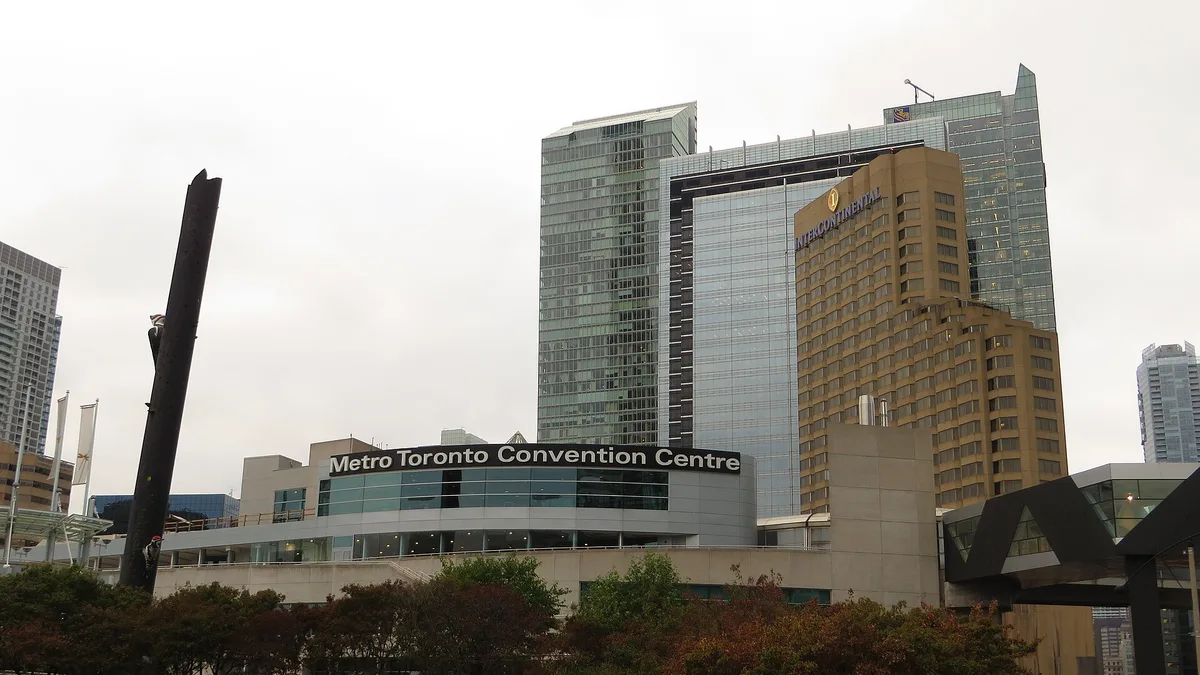
Canadian business leaders and politicians spent the opening of this week's Canada Investment Summit telling global money managers that the country is a safe, competitive place to put capital. Hundreds of large projects, they said, are ready to take it.
The multi-day gathering in Toronto has brought in financiers who collectively oversee trillions of dollars. The domestic message, delivered with some optimism, is that those investors are starting to see Canada that way. The slogan attached to the pitch was that it is "cool to be Canadian."
Safety is the slide. Permits are the product.
Canada does not lack savings institutions. It lacks, in the hosts' telling, enough inbound commitment to the mines, grids, factories, and energy systems that show up as "major projects." A room full of allocators who already manage trillions is the audience that can change that, if they leave with more than a slogan.
Pension funds and global asset managers compare political risk, permitting time, tax treatment, and exit liquidity. They do not fund a mood. They fund cash flows. "Cool to be Canadian" is an attempt to reset the mood so the cash-flow conversations happen here rather than in a U.S. state with a faster interconnection queue.
If the pitch works, some of those trillions get marked against Canadian projects that have been waiting on offtake, on agreements with Indigenous nations, or on a patient equity cheque. If it does not, the country will have hosted a successful conference and an unchanged investment rate.
Workers on those projects and communities that live with the construction traffic are the eventual stakeholders. Day one is speeches. Stakeholders show up when a final investment decision is posted.
CBC News Money first reported the opening-day pitch as the summit got underway in Toronto, including the hosts' line that it is "cool to be Canadian." That phrase will be what clips. The hundreds of projects and the trillions under management in the room are what the roadshow is supposed to convert.
Organizers have not claimed that term sheets were signed on day one. The mood on the Canadian side was that the audience is listening.
A decade of reviews, delays, and a smaller domestic market
Canada's last decade of foreign-direct-investment politics has been uneven: strong in resources when prices cooperate, weaker in scaling non-resource firms, and repeatedly complicated by takeover reviews and infrastructure delays. Investors read the housing-and-permitting debate as a capacity constraint.
The Carney government has treated a more aggressive investment pitch as part of its economic identity. The summit is the showroom. It sits in the same news cycle as tax write-offs, data-centre expansions, and trade friction with the United States, the last of which is not a selling point and which hosts have to talk around or through.
Capital-ready is the controversial adjective. Many Canadian projects have been announced more times than they have been financed. Compared with the United States, Canada offers a smaller domestic market and, in several sectors, longer approval paths. Compared with other mid-sized developed markets, it offers resource depth, pension-fund sophistication, and proximity to U.S. demand. The opening session was an argument that the second comparison should weigh more than the first.
New 50 percent U.S. tariffs on 110 Canadian products landed in the same political weather. Unifor's demand that Stellantis keep Brampton is a live exhibit of industrial risk that foreign allocators will ask about in the corridors. Energy, including U.S. gas prices slipping as European prices hit a one-week low, still sets the cash-flow math on a large share of the hundreds of projects on the slide.
The remaining days only count if a named project moves
The rest of the summit is the first checkpoint. Watch whether any project named on stage comes back with a named foreign anchor investor, a memorandum, or a financing close. Speeches without a follow-up filing are inventory, not investment.
Federal and provincial project lists after the event should show status changes, from proposed to permitted, from permitted to financed. Hundreds of capital-ready files should, if the adjective is honest, start converting on a visible clock.
The same allocators' next Canada weighting in public pension and sovereign reports is where underweights still appear. A Toronto conference is a poor place to announce one.
A diversification pitch is harder to hold if the dominant customer relationship is throwing off tariff headlines in the same week. The slogan is already out. The next useful document is a term sheet, a permit, or a capital-expenditure line that was not there before the financiers flew in.