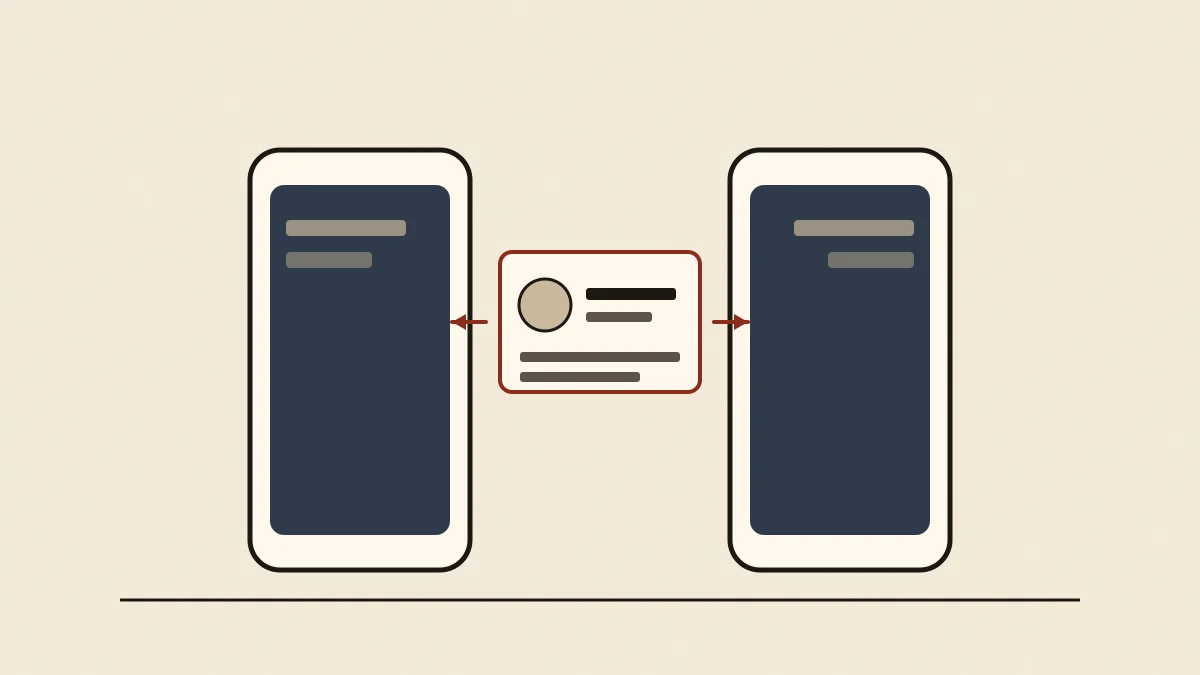
A US startup has asked the Bombay High Court to stop Apple from selling or importing iPhones and Apple Watches that ship with NameDrop, the iOS feature that swaps contact details when two devices are held close together.
GG Technologies, which is based in Santa Monica, filed the 781-page suit in October, according to court documents reviewed by TechCrunch. It is seeking 15 billion rupees, about $161.86 million, in damages, along with an injunction against the feature. The case has not been listed for a hearing.
The company makes StayTouch, an app that does much the same thing: two people bring their phones together and their details are exchanged without pairing or typing. StayTouch launched in 2019, the same year GG first sought patent protection for the method in the United States. Its Indian application went in during 2021, and the patent was granted in July 2024.
Apple shipped first, the patent came later
Apple announced NameDrop at its developers conference in June 2023 as part of iOS 17. The feature reached iPhones later that year, and compatible Apple Watches followed in October with watchOS 10.1. By then GG had been selling a near-identical interaction for four years, though its Indian patent did not exist yet.
The filing asks the court to restrict Apple from selling or importing devices preloaded with NameDrop, which is built into iOS rather than offered as an optional download. Removing it would mean shipping a different build of the operating system in one market, something Apple has resisted elsewhere. Apple's India business already runs on thin margins in payments, where a small fee covers a costly compliance load.
Mediation failed in September
Indian commercial litigation usually requires the parties to attempt mediation before a suit can be filed. GG says those talks began in April and broke down in September, which cleared the way for the October filing.
The company is also pursuing Apple in the United States, where it filed a related patent complaint in April. In August the US International Trade Commission opened an investigation based on that complaint. GG is asking for an order that could block imports of the devices at issue, and for limits on their sale.
Running cases in two countries at once is a common way for a patent holder to press a manufacturer toward a settlement, since an import ban can cost more than a damages award. The Indian suit also gives GG a venue where Apple is still building its position rather than defending an established one.
Why India is the venue that matters
Apple has spent the past few years turning India into both a growth market and a manufacturing base outside China. Retail stores have opened, assembly partners have expanded, and a growing share of iPhone production now happens there. Even so, iPhones account for less than 10% of smartphones shipped in the country, which is why Apple treats it as its largest untapped market. The company has been adding products for that market, including a foldable that local developers have been writing for.
GG was founded in 2018 by Gaurav Goel, a graduate of IIT Delhi and a former Goldman Sachs investment banker, who pitched StayTouch as a replacement for the business card. The app runs on both iOS and Android.
Whether the court reads the two products as one invention will turn on the claims of the Indian patent, which covers exchanging contact information between nearby devices without manual pairing. Apple has not commented publicly on the filing, and GG has not said whether it would accept a licensing deal instead of an injunction.
For now nothing changes for iPhone buyers in India. An injunction would need a hearing, and no date has been set.