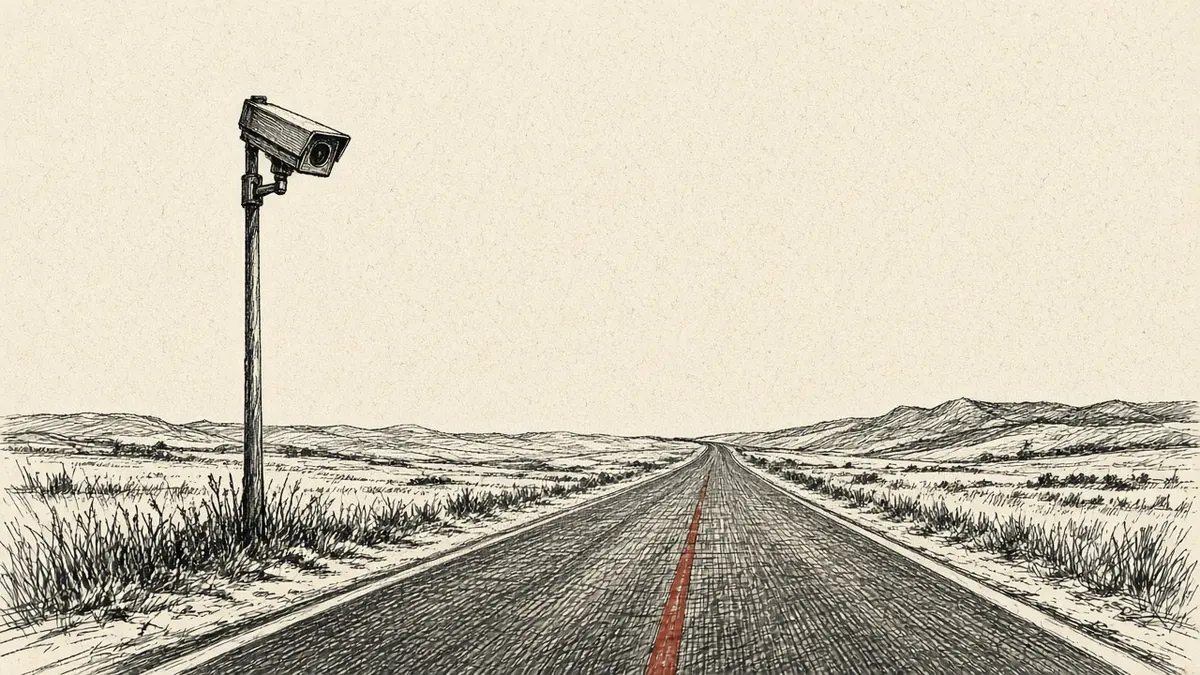
A federal judge in a Tulsa case ruled that a sheriff's deputy violated the Fourth Amendment by searching Flock Safety's license-plate database without a warrant. Judge Sara Hill said the deputy had no apparent reason for the search other than a California plate on the woman's car. He then used her travel history in Flock to justify searching the car, where he allegedly found 91 pounds of meth. Hill ordered everything after the Flock search suppressed, as fruit of a poisonous tree.
TechCrunch, citing 404 Media, is careful about the reach. The ruling does not bind other courts. It is one of the first times a federal judge has called a Flock search unconstitutional. Hill's wider point is about the database, not this deputy alone. Tracking people in public becomes a constitutional problem, she wrote, when police can passively catalog whereabouts over a long period and pull the file whenever it is convenient.
She distinguished it from a phone-location case
Hill called the system "a type of indiscriminate mass surveillance." She contrasted it with Carpenter v. United States, the Supreme Court case on government access to cell-phone location data, which was about one person. Flock, in her description, collects information on every vehicle that passes a networked camera, at all times, and serves it to law enforcement on demand. The California plate was the fact that made the search look untargeted. The 91 pounds were the fact that made the remedy matter: if the search was bad, the drugs found after it stay out.
A phone-side attack on this site was about admin rights, not a camera over a road. Flock's product is the pole, and the database behind it. North Korea has already put malware in coding tests on tens of thousands of machines. Hill's order is about a sheriff's search, not a foreign campaign. The shared fact is a file of people's movements that somebody can query.
Florida and Texas have said they will stop using the cameras. Langley, the chief executive, has apologized to women who were stalked by officers through the system, and he has asked for a compromise between privacy and safety. Buyouts are the staffing response the piece reports, offered as cancellations accumulate. TechCrunch plans to put him on a stage. The Tulsa defendant is not that stage. She is the person whose plate was searched because it was from California, and whose later car search Hill threw out.
Sanders filed a bill on October 2, 2026
On Friday, October 2, 2026, Senator Bernie Sanders introduced the Block Flock Act. It would bar federal agencies from using automated license-plate readers of the Flock type. Flock's chief executive, Garretty Langley, has asked for a compromise between privacy and safety, and has apologized to women stalked by officers using the system. With cancellations piling up, Flock has reportedly offered voluntary buyouts to shrink the staff. TechCrunch notes it plans to interview Langley on a Disrupt stage.
The order suppresses one search
The Tulsa order suppresses one car search. The sentence that will travel is Hill's description of a camera network that records every plate and answers whenever a deputy asks. Sanders' bill is the attempt to turn that description into a federal ban. Hill's order does not do that work by itself. The search she threw out started with a plate from another state and ended with 91 pounds of meth that she said could not be used. Between those two facts is the Flock history of the car. That history is what she called the fruit of a poisonous tree. Langley's apology and the buyouts are the company's response to a longer list of cancellations. Sanders' bill, dated Friday, October 2, 2026, would stop federal agencies from using this kind of reader. Hill cannot enact it. She can suppress one case.