World of Warcraft: Forever has been live for a little over a week, and almost nobody has finished it. A handful of players raced to level 60 in the first days. The rest are still questing, which is the point of a re-release built to be played slowly.
Blizzard's launch was its smoothest in years, according to GameSpot's week-long playthrough, and the reasons are mostly mechanical rather than dramatic.
Layering did the quiet work
The first week of an MMO is the only week when the world is as full as it will ever be, and past WoW Classic launches turned that into a scrum over quest mobs and loot. Forever used heavy layering, splitting players across copies of each zone, and the result was crowded without being broken. Cities looked full. Quest areas had room.
The visual overhaul carries more weight than expected. New lighting, fog and weather turn familiar zones into places with a mood: a snowstorm in Dunmorogh cut visibility to about 20 feet, and rain over Orgrimmar changed how the city read at night. None of that is new systems work. It is the kind of change that makes an old map feel like a location instead of a diorama.
New content lands the same way. Forever adds quests and two low-level dungeons, the Hall of Thanes under Ironforge and the Ruins of Lordaeron, and they sit so close to the original design that a veteran cannot always tell which quest is new. Early profession quests in starting zones are the most useful addition, since they let a character begin gathering before leaving home.
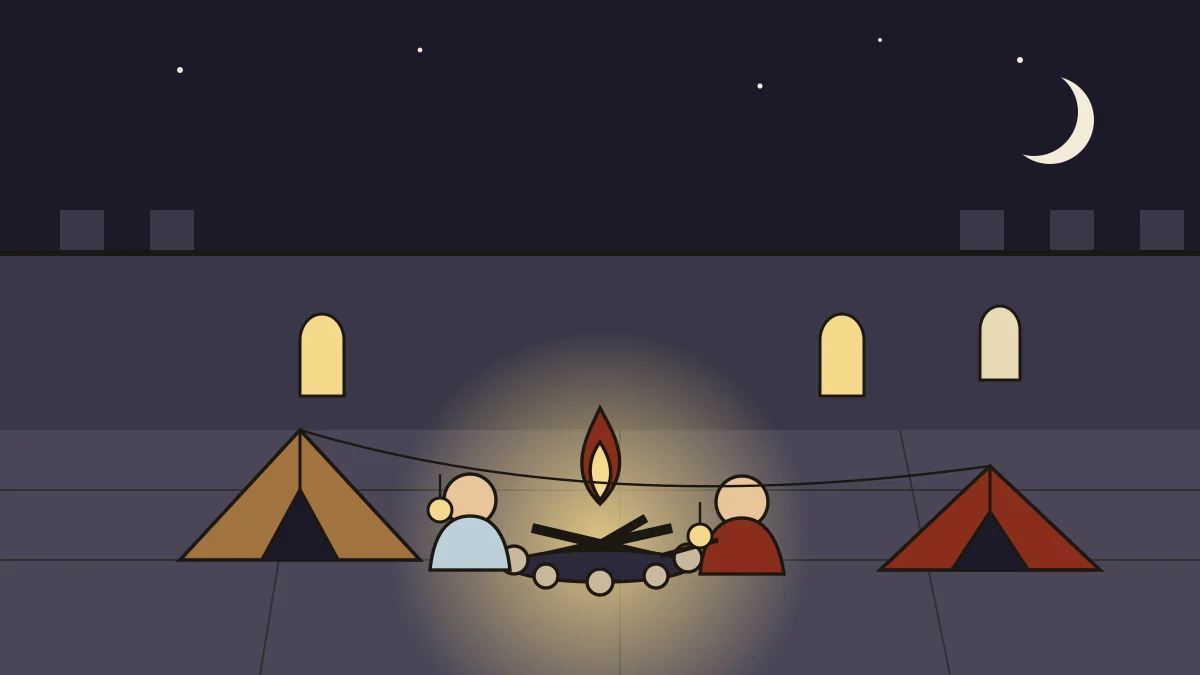
Camping is the surprise. Sitting at a fire for a minute for an experience buff, sharing profession buffs and chatting is exactly the behavior an efficiency-minded player would skip, and in practice the campsites are full. It works because it pays out in a currency classic players already value: time spent in the world.
Respec costs still bite
The complaints are about friction that Blizzard kept on purpose. A talent reset costs one gold, which at level 14 is most of a character's savings, so a mistaken point stays mistaken. Dual specialization unlocks at level 40 and costs 50 gold, which means almost nobody leveling will use it during the stretch when a tank or healer shortage hurts most.
That is faithful to 2005 and still a design problem. The cost will stop mattering once the player base reaches the endgame and gold accumulates, which is the argument for leaving it alone. In the meantime it suppresses exactly the experimentation a new talent tree needs.
The in-game store is the other sore spot. Forever has a shop tab and a collections panel, both imported from modern WoW, and the Skyborne mounts from the collector's edition are visible on a level-one character's list even though they cannot be used until level 40. The high-resolution models look out of place beside the 2004 art, and Blizzard has said standard-definition versions of the Skyborne are coming early next year.
Legacy talents look unfinished
The one new system that has not found its shape is Legacy talents, an account-wide perk tree fed by achievements. Points come from exploration, class milestones and dungeon clears, and they buy small conveniences: vendor discounts, longer food buffs, cheaper flight paths.
The arithmetic is thin. Exploring all of Azeroth earns a single point. Leveling a first character to the cap, maxing two professions and clearing every dungeon lands around 12 points, against a cap of 16 spendable per character at launch. Most perks read as minor, a few read as close to mandatory, which is the wrong split for a system meant to reward breadth.
Blizzard has been deliberate about what Forever is: a version of the game built so a late start is still a real start, with the friction left in on purpose and a memory profile that assumes thousands of players on one shard. The first week suggests the world-building landed and the economy around it still needs tuning. The next test is what happens at level 60, when players stop consuming content and start measuring it.
Source: GameSpot