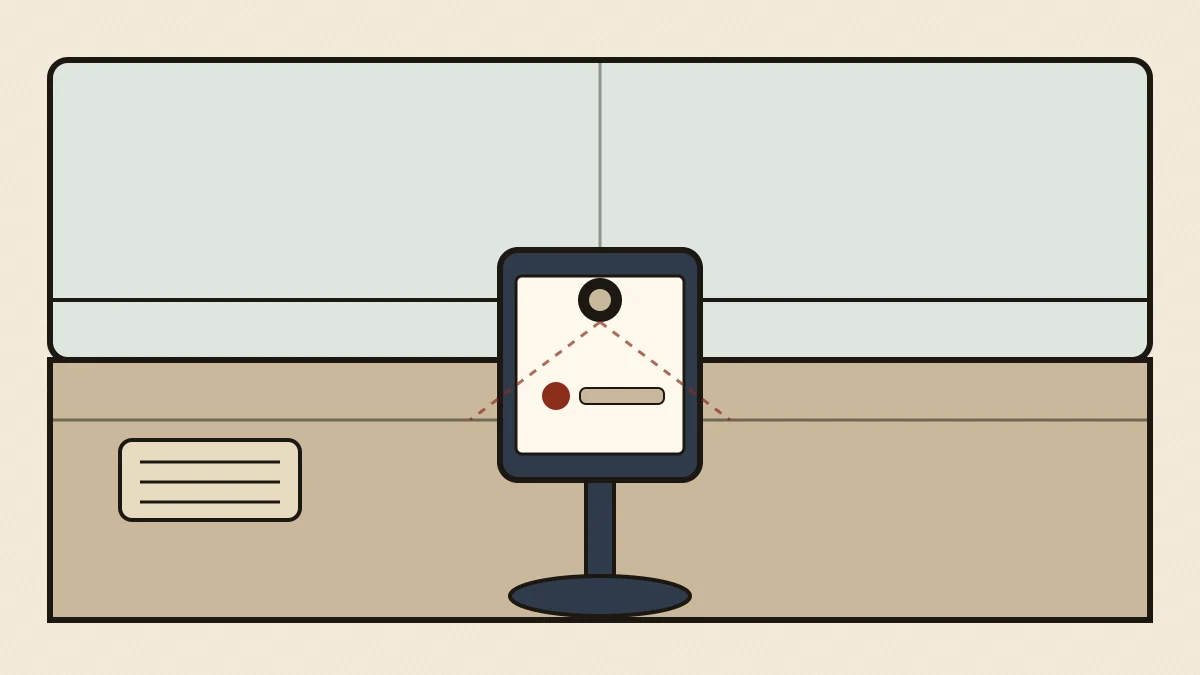
Uber riders in four American cities can now ask for a car that records the trip. The Recorded Rides option appears in the app this week in Baltimore, Indianapolis, St. Louis and Raleigh, North Carolina, alongside UberX and similar tiers, and it matches passengers where possible with a driver who has turned on the company's Record My Ride feature.
Choosing a recorded trip does not change the price. Drivers can switch recording off in settings, and riders can decline permission when the app asks, though declining only means the matching preference is ignored, not that the car is camera-free. The request sits on the same fault line as Signal turning screenshots off by default to keep agents out: a camera or a capture rule arrives as a feature and turns into a question about who controls the record.
The feature itself is not new. Uber tested in-app audio recording in late 2019, piloted Record My Ride in 2022, brought video to San Francisco in 2023 and extended it across the country in 2024. What changed this week is who can ask for it. Until now the camera was a driver-side tool, used mostly after incidents, and the company says more than half of its active drivers in the United States have it on.
How the recording works
The camera is the front-facing lens on the driver's phone, mounted to capture the cabin and the road. Uber says footage is encrypted and stored on the driver's device rather than uploaded to its servers, and is deleted automatically after a set period. The company can review a recording only when one is attached to a safety report or an insurance claim, a representative told CNET. Drivers who run their own dash cams separately can register them, but those devices sit outside this program.
The framing is familiar from the platform's other safety work. Uber has argued for years that the possibility of being recorded changes behavior in both seats, and the app now tells riders when a trip may be captured. The company says the option gives passengers "greater confidence that a recording will be there if something doesn't go as planned," language that follows a run of safety investigations and settlements over assaults during rides.
Where the company wants to take it
Uber is testing more automatic triggers. It plans to switch Record My Ride on for trips that may warrant extra oversight, such as late-night rides or those booked for teenagers, and is looking at starting a recording when a trip leaves its expected route or when the app detects a crash. A further experiment would turn on audio recording through the rider's own phone at night, which would require consent and access to the microphone, as TechCrunch described.
Each of those steps moves the product from an optional camera toward default surveillance of a private car, and the consent design will decide whether riders accept it. The comparison with consumer hardware is not flattering: when Oura delayed its listing as smart glasses drew privacy scrutiny, the objection was that wearing a camera changes what bystanders can assume about being watched. A rideshare trip already puts a stranger's camera in the back seat, and the pilot makes it a selection criterion.
Riders who care about the distinction have a narrow window to use it. Selecting a recorded ride is a preference rather than a guarantee, since the app matches only when a recording driver is nearby. Not selecting one does not mean the car is unrecorded either, because a driver's own dash cam can still be running. What the option adds is a way to ask for the camera on purpose, in four cities, for now.
The broader pattern is that platforms keep adding sensors and then negotiate the rules afterward. Uber's version is quieter than most: a checkbox, no new hardware, and a promise that the file stays on the phone until someone needs it. Whether that counts as safety or as an always-on witness in a stranger's car depends on which seat you are sitting in.