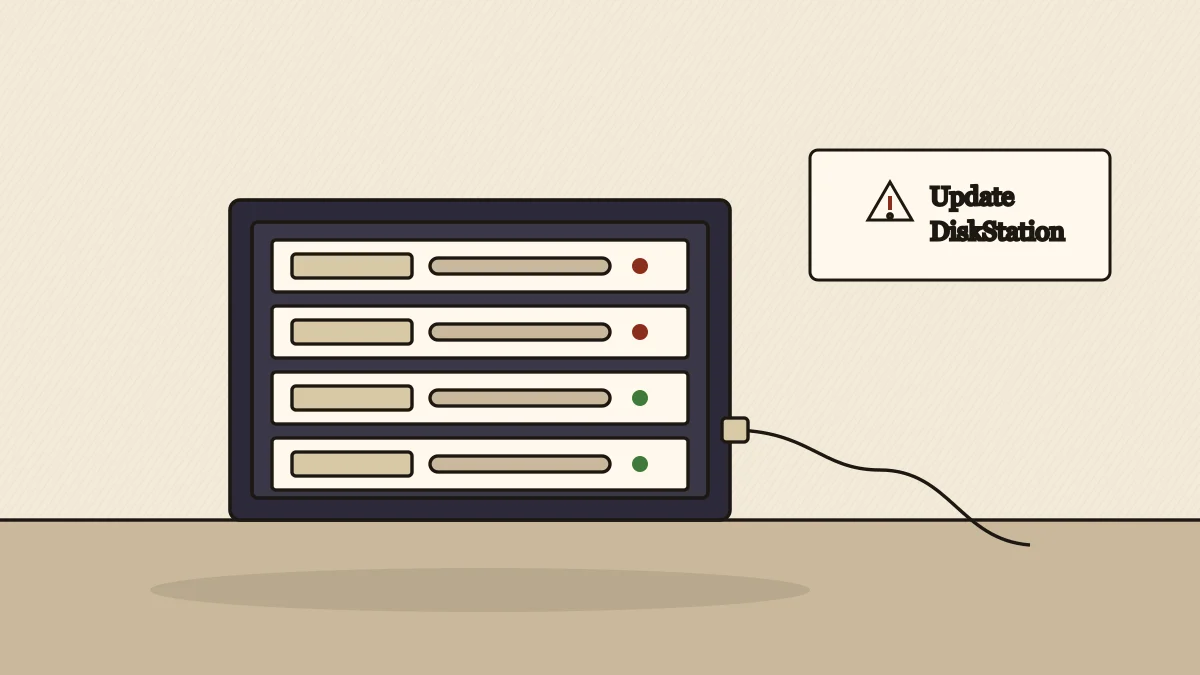
Synology has patched two serious vulnerabilities in DiskStation Manager, the operating system running its network attached storage drives, and both holes let a remote attacker read and write files on a device they never logged into. The fixes have already rolled out to most users through DSM's updater, but a box sitting on a shelf quietly waiting for auto-update is exactly the kind that gets missed, so the practical step this week is checking the version yourself.
The first flaw is the frightening one. Synology describes it as improper neutralization of special elements in an SQL command in the Auth API, which allowed remote attackers to read or write arbitrary files and conduct denial-of-service attacks. On the CVSS3 scale it scored 9.8 out of 10, the "critical" band, and for a device whose entire purpose is holding the only copy of family photos, game saves, and work archives, arbitrary file access is about as bad as a vulnerability description gets. The second is an authentication bypass via an alternate path in the rsync component, scored 8.6, which let attackers skip the login process entirely and reach the same outcomes: unwanted reads, writes, and denial-of-service abuse.
The patch arrived, but the timing is not comforting
This is not Synology's only open incident. Late last month the company notified users of active ransomware attacks tied to a 2024 security advisory, a separate set of weaknesses from this week's pair. One vulnerability got patched, attackers moved to another, and the pattern is the familiar one: storage appliances are attractive targets precisely because people set them up once and stop looking at them.
The update mechanics deserve a skeptical eye too. Auto-updaters are far from perfect, and a NAS that has been running for years may be pinned to an old DSM version or have automatic updates switched off after one too many scheduled reboots. Checking takes two minutes in the DSM control panel, and the newest builds are what close both holes.
Why home NAS boxes keep ending up in these stories
The reason consumer storage keeps appearing in breach reports is structural. A NAS usually sits on a home network pointed at the internet for remote access, holds irreplaceable data, and runs continuously, which makes it a better target than most PCs on the same network. The 2026 record backs this up: it has been a year defined by security failures across consumer devices, and the Teams breach that started with one phone call from fake IT support showed how little sophistication is needed when the target trusts the wrong channel. On the software side, a 256 character password that opened Alpine Linux without being the password was a reminder that even well-maintained open source stacks ship logic bugs nobody expected.
For Synology owners the checklist is short. Update DSM to the latest build now, confirm automatic updates are actually enabled, and if the box is exposed to the internet for remote file access, double-check which services are reachable from outside. Backups should follow the 3-2-1 habit regardless, because the ransomware campaigns circulating against older advisories do not care whether you installed this week's patch.
Source: PC Gamer