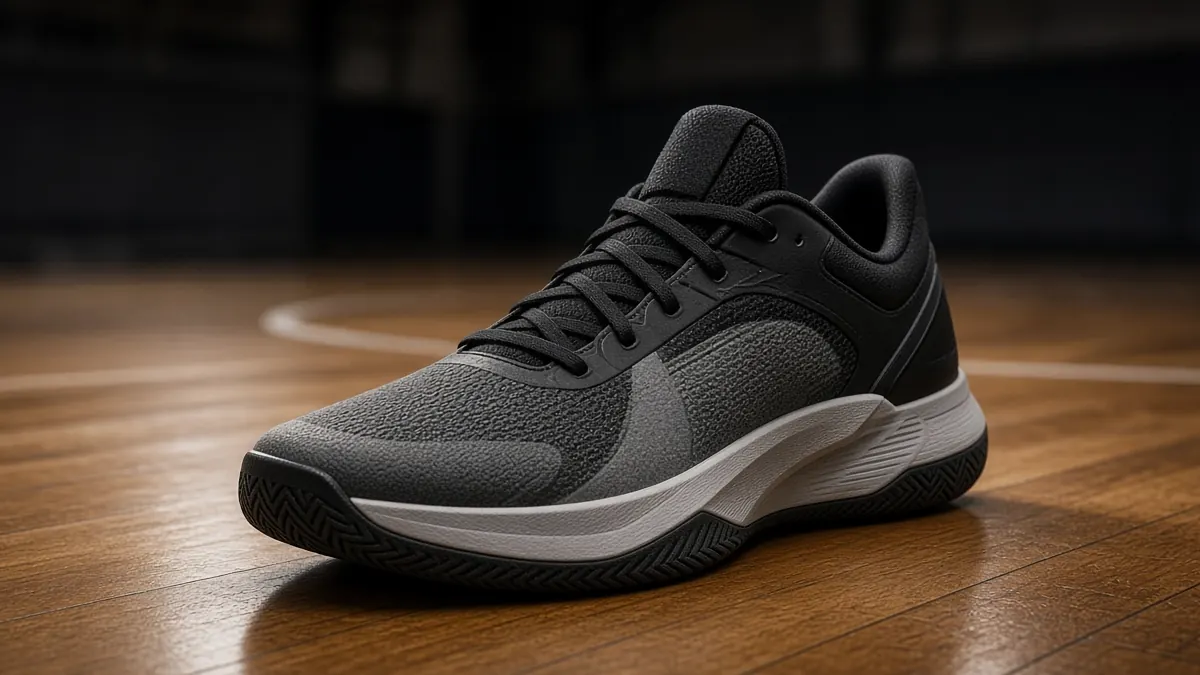
Stephen Curry said his Li-Ning signature shoe will reach the market early next year. That is the first product date attached to the long-term partnership the Golden State Warriors guard announced in June.
No price. No colorway calendar. No list of doors that will carry it. The June signing was the legal fact. An early-2027 window is now the merchandising fact.
A named shoe is the part of an endorsement that can fail in public
Campaign films do not have SKUs. A signature shoe does. Li-Ning has treated the Curry pact as a flagship endorsement, and a named model is how those deals are supposed to pay for themselves.
For Curry, the launch is the first time his name sits on a silhouette that is not tied to the U.S. brand that built a basketball business around him in the 2010s. For Li-Ning, he is the most visible athlete the company has used to sell outside its home market. U.S. retailers will decide whether they will stock a Curry shoe that is not from the incumbent shoppers grew up with. Chinese retailers will decide whether the global face helps at home.
If the model lands on time, with inventory in more than a handful of cities, the long-term contract starts to look like a platform. If it lands late, thin, or only through China-centric channels, the deal looks like a billboard.
CNBC first carried Curry's early-next-year timing against the June partnership announcement. That pairing turns an endorsement headline into a factory deadline. Roughly half a year from signing to a first signature is compressed, but it is a familiar development cycle.
Under Armour built the franchise Li-Ning now has to replace
Curry left Nike in 2013 and spent the core of his championship years in Under Armour basketball shoes. The Curry line became one of the few non-Nike, non-Jordan signatures that moved real volume in North America. That history is the baseline. Anything Li-Ning ships will be compared with it, fairly or not.
Li-Ning, named for the Olympic gymnast who founded it, has long been a domestic rival to Nike and Adidas on the Chinese mainland. Athlete signatures have been the tool for looking like an international performance brand. Dwyane Wade's earlier association was the most cited Western precedent. A current superstar still in his playing window is a different commercial object than a retired icon.
Chinese sportswear groups spent the past several years buying global names while still earning most of their revenue at home. A Curry shoe is the loudest version of that attempt in basketball. The Warriors guard remains on nationally televised games, which matters for on-court visibility. Shoes that launch while the athlete is still playing have a different sell-in than shoes that launch in retirement.
The Warriors guard remains the face of the partnership. For Li-Ning, the launch is the first test of whether the long-term contract can sell shoes, not only headlines. A first signature that misses its window becomes a delayed SKU, and delayed SKUs are how endorsement deals start looking like advertising.
Early next year is now a sell-in, not a vibe
Li-Ning still owes shoppers a month and a suggested retail price, plus a map of regions. Until those exist, "early next year" is a development window, not a street date you can circle. Resale accounts will fill the gap with rumors. They are not a distribution plan.
If the first model is sold in North America at scale, the deal is a global footwear bid. If it stays in China-centric channels, it is a domestic campaign with a famous American face. On-court use is the other tell. Curry wearing the shoe in regular-season games means performance equipment. Lookbooks only means lifestyle.
The next athlete Li-Ning announces will show whether the company thinks the Curry template is working. Silence would suggest the first shoe has to prove itself first.
Investors who live in a Nvidia unit-doubling tape are not waiting on a basketball shoe. They are waiting on consumer demand that still has to show up in discretionary categories. High-end spend signals such as a Sapphire Reserve anniversary are a better read on whether signature sneakers still clear. Policy shocks, including a Bank of Japan hike to a 31-year high, filter into the yen and into the cost of goods for a China-based manufacturer selling abroad.
The contract is long-term. The shoe is the first invoice the market can see. Early next year is when that invoice comes due.