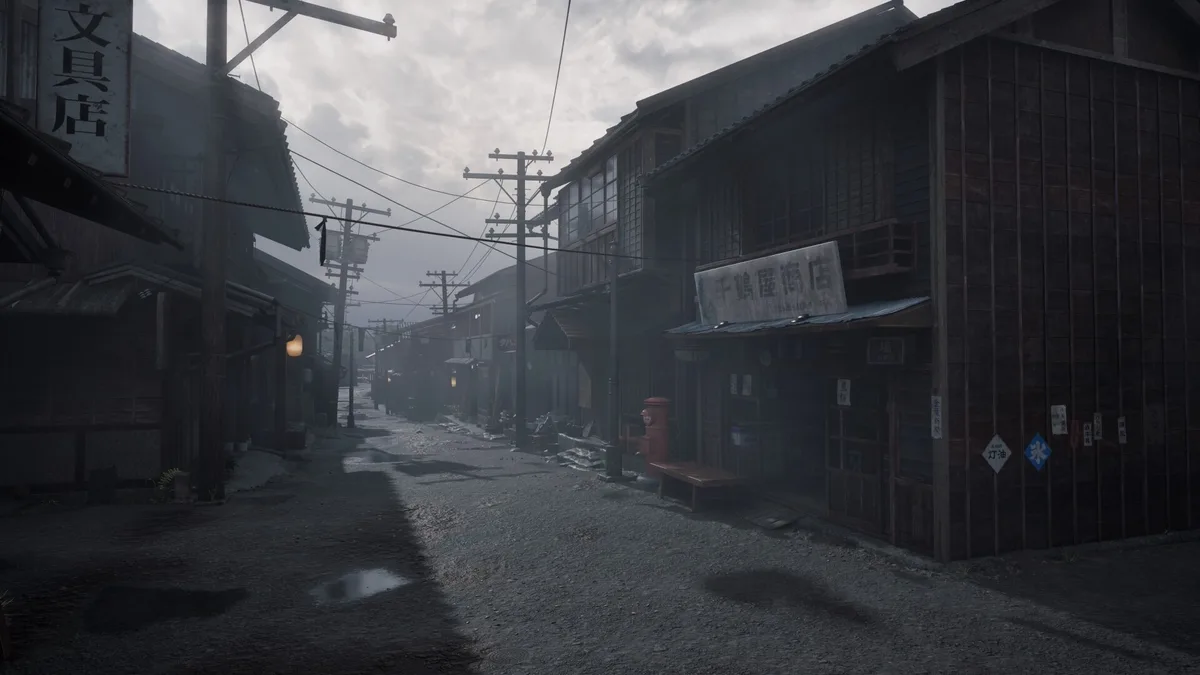
Konami has an internal bible for what counts as Silent Hill. Series producer Motoi Okamoto says the company tries not to give it to the teams making the games.
The quote, via Radio Times Gaming and carried by PC Gamer, is the policy. "We do technically have an internal bible for what constitutes Silent Hill, but we try not to distribute that to our development teams too much because I think it's more important that they organically can do their own research and try to figure out what is symbolic to them." He wants each team to decide what Silent Hill means, then build from that research.
A document that exists in order to be withheld
A lore bible is usually the thing you hand over so a contractor does not break the fiction. Okamoto is describing the opposite use. The document is real. Distribution is the exception. The default is that a studio arrives with its own reading.
That matches a comment he and Al Yang, director at NeoBards Entertainment, made last year before Silent Hill f. Future titles, they said, will "probably carry their own flavour," depending on the team. The two comments are a year apart, and they describe one rule. The series is a set of constraints, not a script the next studio is supposed to copy.
PC Gamer lists what it thinks cannot be dropped: fog, monsters, a place loaded with anger, depression, and regret. That list is the writer's, not a page from the bible. Nobody outside Konami is being shown the document. The quotable policy is narrower. Teams should do the research themselves.
Townfall already used one trauma three ways
Silent Hill: Townfall, from Screen Burn, put three characters through one shared trauma, "in different ways and to different extents." That is a concrete result of letting a team interpret the series. One curse, three psychologies, no requirement that they stand on the original streets and repeat the original plot.
The game that moved the series to a Scottish island spent the same permission on a setting. If the bible were a checklist of streets, that island pitch would have failed it. Okamoto's description does not sound like that checklist, or at least not like one he wants a team to memorize before it starts.
Resident Evil's game ending, in an earlier piece here, is a mutation, a cure, and a sequel hook. That series keeps restating a building and a virus. Silent Hill, on this producer's account, keeps restating a mood and then changing the building. A studio shipping without its old owner's template is the outside version of the same problem. Okamoto is asking for it from the inside: the template exists, and the instruction is not to lean on it.
Withholding the bible is a production choice, not a tease
Fans will not get the document. Okamoto did not offer a redacted page, a date, or a count of how many studios have been allowed to see it. "Not too much" is the only quantity. The information a team is supposed to use instead is its own research into what the name means to that team.
That is a hard way to run a brand and a tidy way to explain why recent entries do not look like each other. It also means a bad reading cannot be blamed on a missing PDF. The team was told to go find Silent Hill, and then it shipped one.
Silent Hill f is the other worked example already on the record, and it came with a warning rather than a rulebook. Okamoto and Yang said future titles would carry their own flavour. Townfall then did the flavour in numbers a reader can count: three protagonists, one trauma, different doses. A bible that is withheld cannot contradict that arithmetic, because the teams were told not to open it.
The next Silent Hill game will show whether the instruction survives a marketing department that would rather every box say the same thing. Until Okamoto names a team that was refused the bible and shipped anyway, the policy is one paragraph, and Townfall's three-way split is the only worked example in this interview.