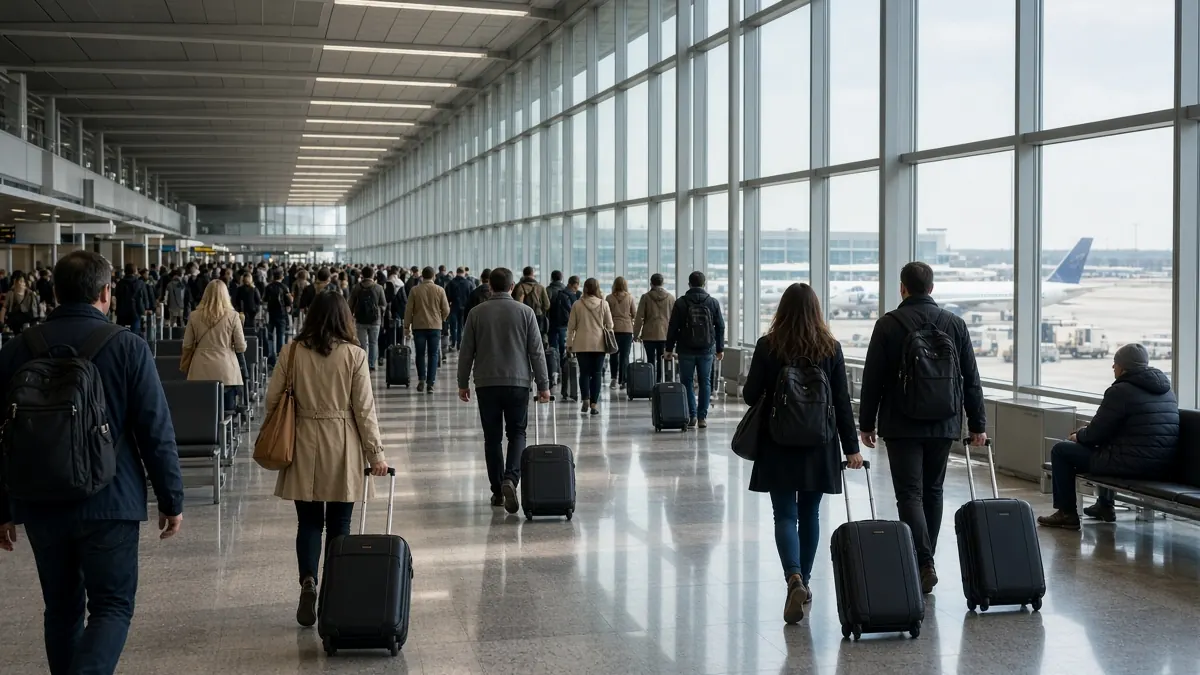
Prime Minister Mark Carney said his government will open Canada's four largest airports to private investment, while Ottawa keeps ownership of the "underlying land and assets." Private money would be brought in through "long-term concessions" to operate the airports. The four sites are Toronto Pearson International Airport, Vancouver International Airport, Trudeau International Airport in Montreal, and Calgary International Airport.
The plan would also admit foreign investors into those operating roles. Concession holders would run the facilities without taking title to the property underneath them. Carney presented the structure as a way to attract capital to the country's busiest aviation hubs without selling the airports themselves.
What a concession sells, and what it does not
This is not a fire sale of Pearson. It is a bid to let private operators, including ones from outside Canada, take day-to-day control under multi-year contracts while the Crown stays on the land registry. If you fly those four airports, the logo on the terminal might change before the runway does. Fees, retail, capital spending, and how painful a missed connection feels are the parts that move when an operator's return is on the line.
I would rather see a concession with a published service standard than a vague promise that ownership stays Canadian while the queues stay the same. Keeping the land is the political shield. The operating contract is the thing passengers will actually live with. Foreign capital is the part that will start a fight in Question Period. All three are in the announcement.
Travellers should watch landing fees, passenger facility charges, and whether a private operator is allowed to squeeze retail harder than the current airport authorities already do. Unions should watch contracting. Cities should watch ground transport links the operator does not own but will still want to reshape. Pearson already feels like a mall with airplanes. A concession that treats the mall as the product will make that worse on purpose, then call it customer experience.
Canada already leases the dirt. Carney is leasing the keys.
The National Airports Policy of 1994 pulled the federal government out of day-to-day airport operations and handed the big sites to not-for-profit authorities on long ground leases. Pearson's GTAA, Vancouver's YVR authority, Aéroports de Montréal, and Calgary's authority already run businesses on Crown land. What they are not, in the usual telling, is equity vehicles for global infrastructure funds.
Britain went further. BAA's privatization in the 1980s turned Heathrow and a string of other airports into listed, then heavily leveraged, assets. Australia sold airport leases too. Those files are the comparison Carney's model will be measured against, fairly or not. A concession can fund a terminal. It can also load an airport with rent extraction. The Canadian twist is the insistence that the "underlying land and assets" never leave Ottawa.
Carney has spent the same stretch telling global allocators that Canada is open. Choosing partners after Trump mocked an EU idea is that pitch in diplomacy. Airport concessions are that pitch in gates and jetways. Gomez warning that AI fear talk could close a commercial door is the same week of argument in software. Different files. Same hunger for capital that is not American by default.
Four hubs, one political test
CBC News Money first laid out the concession structure in Carney's own terms: long-term operating rights, foreign investors allowed, land retained. Tuesday's remarks, in the surrounding coverage, put private operators into Toronto, Montreal, Calgary, and Vancouver specifically. Those are the four doors. Secondary airports are not in this sentence.
Do not invent a lease length. None was attached. "Long-term" is the phrase. Watch the request-for-proposal when it appears for the actual number of years, the capex obligations, and whether a Canadian partner is required beside a foreign one. Watch also whether the current authorities are converted, displaced, or kept as landlords under a new operator.
U.S. fiscal fights, including Jack Lew telling lawmakers to keep Social Security options open, are a reminder that aging public systems eventually hunt for money. Canada's hunt, in this case, is for terminal upgrades without a fire sale of the dirt. If the first concession lands with a foreign infrastructure fund and a quieter security line, Carney will call it a model. If it lands as higher fees and a fight over who staffs the checkpoints, it will be a one-term experiment. Pearson is where that verdict will be obvious first.