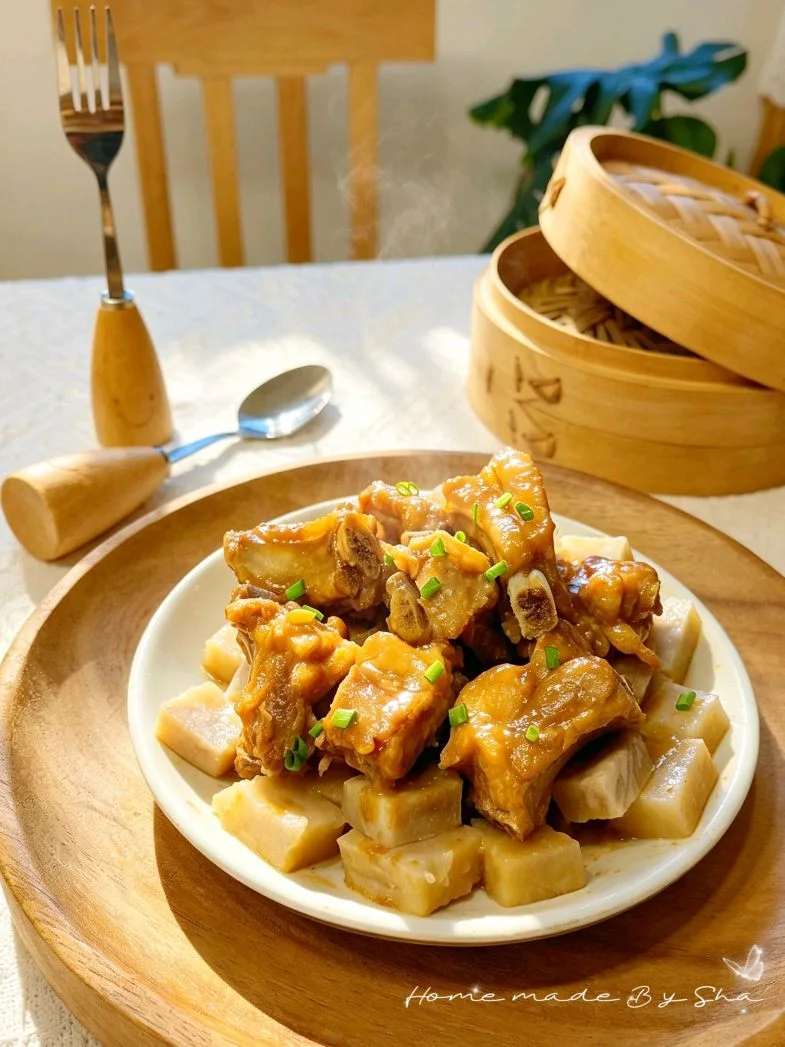
The taro is not a side dish here, it is the sauce sponge. Ribs sit on top of it through a long steam, and by the time the meat is done the slices underneath have absorbed everything the marinade and the meat released. The trick the source keeps repeating is patience at the marinating stage, in three separate passes.
Chinese · Main
Pork ribs steamed over taro until the sauce sinks
Ribs soak to lift the blood out, marinate in two stages, then steam on a bed of taro for up to fifty minutes while the slices underneath drink the drippings.
- Prep20 min
- Cook50 min
- Serves2
- LevelEasy
Ingredients
| 300 g | pork ribs, chopped small |
| half | taro, peeled |
| 2 slices | ginger |
| 2 cloves | garlic |
| 1 | scallion |
| 1 tablespoon | cornstarch |
| 2 tablespoons | Shaoxing wine, divided |
| 2 tablespoons | light soy sauce, divided |
| 1 tablespoon | oyster sauce |
| 1 teaspoon | white pepper |
| 1 teaspoon | salt |
| 1 tablespoon | cooking oil |
Method
- Soak the ribs in cold water with one tablespoon of the wine for 15 to 30 minutes, changing the water once or twice, then rinse and drain well.
- Slice the ginger and garlic, cut the scallion into sections.
- Toss the ribs with the scallion, ginger, garlic, white pepper, salt, one tablespoon of soy sauce, the oyster sauce and the last tablespoon of wine. Rest 10 minutes.
- Add the cornstarch and toss again to seal in moisture.
- Finish with the oil, toss once more, and marinate at least 20 minutes.
- Cut the taro into blocks about 2 cm thick and lay them over the base of a plate.
- Arrange the ribs in a single layer on the taro, steam over cold water start on medium-high heat for 40 to 50 minutes.
- Test with a skewer: it should slide through both rib and taro with no resistance. Scatter scallion on top and serve.
Notes
- The oil goes on last, after the starch. It coats the meat so the marinade cannot dry out during the long steam.
- Cold-water start matters: the taro heats through gradually instead of seizing on the outside.
Ratios and technique checked against 沙小囡 on Douguo (香芋蒸排骨). The method here is written by Stellaok; the photograph is the source kitchen's, credited on the image above and linked back to the page it came from. No recipe text is reproduced.