This version keeps the numbers fixed so the sauce behaves the same way every time: 30 grams of doubanjiang, a 100 milliliter water to 50 gram starch slurry added spoon by spoon, and ground Sichuan pepper off the heat so it stays fragrant. The blanching step up front is what keeps the cubes from breaking later.
Sichuan · Main
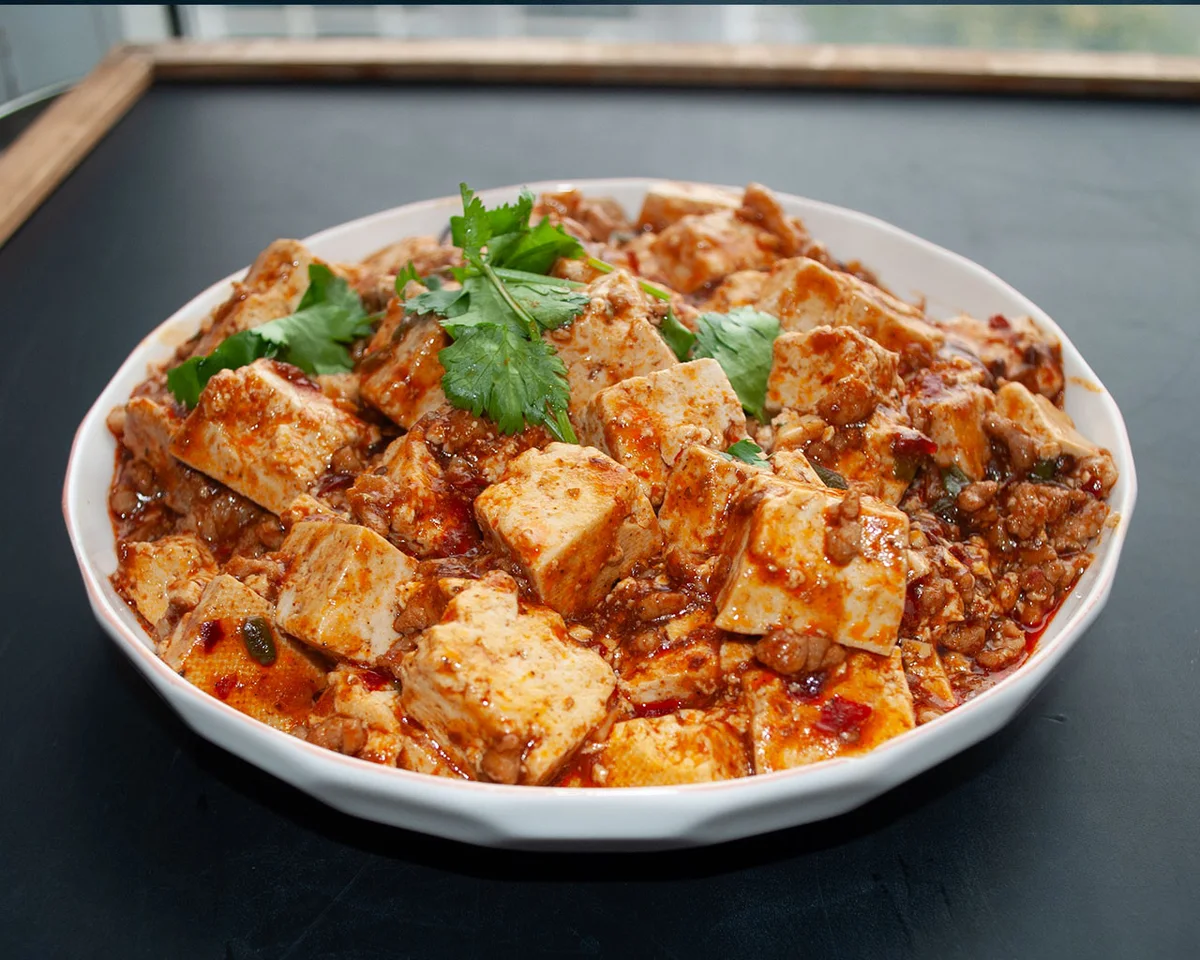
Mapo tofu with a fixed-ratio starch slurry
Blanching sets the tofu cubes, fried doubanjiang and ground pork build the sauce, and a fixed cornstarch ratio thickens it without strings.
- Prep10 min
- Cook15 min
- Serves3
- LevelEasy
Ingredients
| 300 g | firm tofu , cut into 2 cm cubes |
| 100 g | ground pork |
| 30 g | doubanjiang , fermented chili bean paste |
| 20 g | ground Sichuan pepper |
| 10 g | chicken bouillon powder |
| 20 ml | cooking wine |
| 200 ml | boiling water , for the sauce |
| 100 ml | water , for the slurry |
| 50 g | cornstarch , for the slurry |
| 50 g | scallions , chopped |
| 20 g | ginger , minced |
| 20 g | garlic , sliced |
| a pinch | salt , for the blanching water |
Method
- Cut the tofu into even cubes. Mince the ginger, slice the garlic, and chop the scallions.
- Bring a pot of water to a boil with a pinch of salt, blanch the tofu for 2 minutes, and lift it out with the water still simmering.
- Heat oil in a wok until it shimmers, add the ground pork over high heat, and fry until it just turns pale gold.
- Pour in the cooking wine and stir over medium heat for 2 minutes, then scoop the pork out and set it aside.
- In the same wok, fry the scallion, ginger and garlic with the doubanjiang over low heat until the oil turns red and fragrant.
- Return the pork, toss to coat, and pour in 200 milliliters of boiling water.
- Add the blanched tofu and simmer over medium heat for 2 minutes while the sauce reduces slightly.
- Stir the cornstarch into the 100 milliliters of water to make a slurry, then add it a spoonful at a time, stirring gently between additions, until the sauce clings instead of pooling.
- Off the heat, sprinkle in the chicken bouillon powder and the ground Sichuan pepper, give it one last gentle stir, and serve with the scallions over the top.
Notes
- Adding the slurry gradually is the difference between a silky sauce and a congealed one; stop as soon as it clings.
- The Sichuan pepper goes in at the end because long heat dulls its numbing edge.
Ratios and technique checked against 昊天兄私房菜 on Douguo (麻婆豆腐—— 思念的味道). The method here is written by Stellaok; the photograph is the source kitchen's, credited on the image above and linked back to the page it came from. No recipe text is reproduced.