A toast cup is nothing more than a slice of bread persuaded into a mold with one knife cut and a small bowl. The filling is cold mashed potato, so the air fryer has one job: melt the cheese and toast the edges. Seven minutes at 170 degrees Celsius is enough for both.
Chinese · Breakfast
Crispy cheese and mashed potato toast cups with pecans
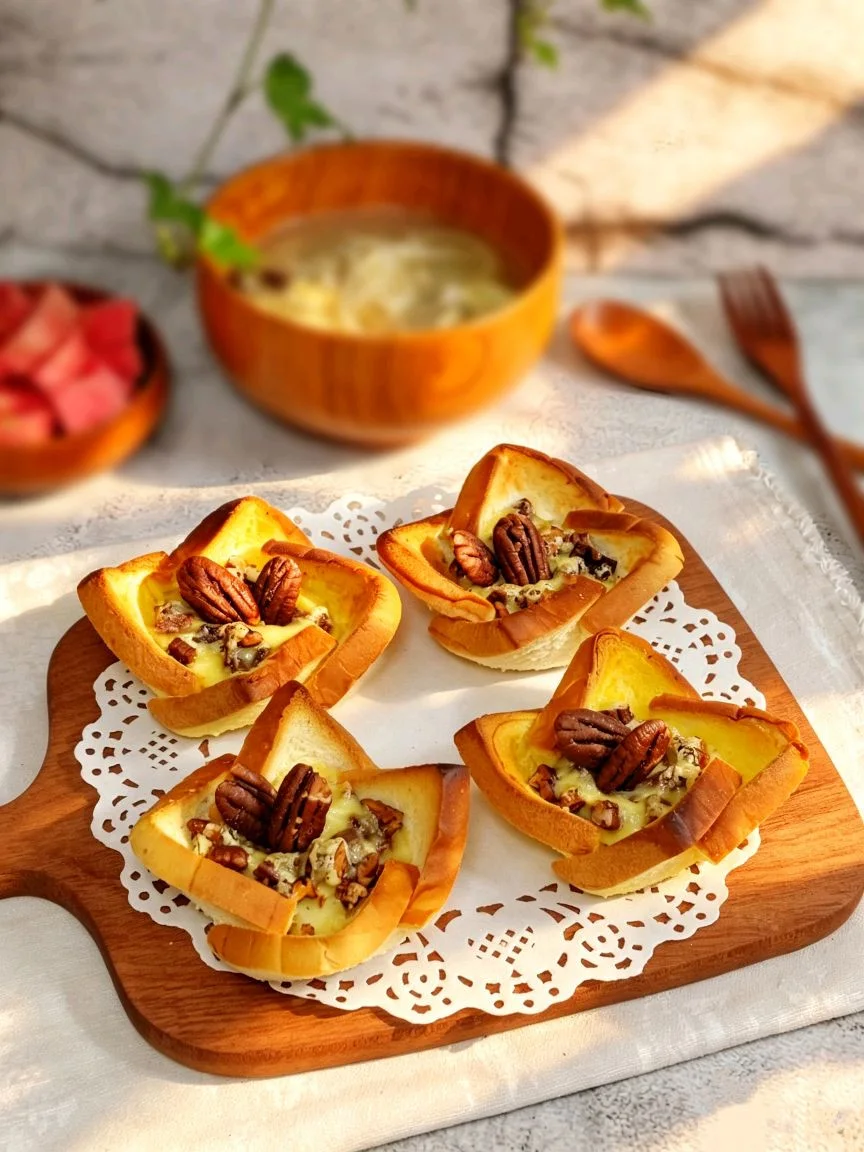
Bread slices folded into cup shapes, filled with peppered mashed potato and chopped pecans, topped with cheese, then crisped in an air fryer until the edges turn gold.
- Prep30 min
- Cook7 min
- Serves4
- LevelEasy
Ingredients
| 4 slices | sandwich bread |
| 1 medium | potato, steamed and peeled |
| a pinch | salt |
| a pinch | white pepper |
| 50 g | pecans, half of them chopped |
| 40 g | shredded mozzarella cheese |
Method
- Peel the potato, cut it into small chunks so it steams evenly, and steam about 20 minutes until a chopstick slides through without resistance.
- While it steams, cut a short slit from the middle of each bread slice's edge toward the center on all four sides, then press the slices into small bowls so the cuts overlap and fold into cup shapes.
- Mash the steamed potato while it is hot with the salt and pepper until completely smooth; hot potato mashes with no lumps.
- Fill each bread cup with the mash and level it gently with the back of a spoon, leaving a little room for the toppings.
- Scatter the chopped pecans over the potato, then add a layer of cheese that reaches the edges.
- Air fry at 170 degrees Celsius for about 7 minutes, until the cheese melts and bubbles and the bread edges turn crisp and gold.
- Finish each cup with two whole pecan halves pressed lightly into the melted cheese so they hold when lifted.
Notes
- The filling goes in cold or at room temperature, which keeps the bread from steaming before it crisps.
- Any melting cheese works, but mozzarella gives the stretch when you pull a cup apart.
- Cup shapes made from slightly stale bread hold their corners better than fresh.
Ratios and technique checked against 简**e on Douguo (香酥芝士土豆泥碧根果仁吐司杯). The method here is written by Stellaok; the photograph is the source kitchen's, credited on the image above and linked back to the page it came from. No recipe text is reproduced.