A peeler does the work here. Taro is dense and slightly waxy, so a knife cuts it into slabs while a peeler takes off a curl thin enough to crisp in the time it takes to brown. The rinse matters as much as the slice: surface starch is what makes the pieces stick to the tray and to each other.
Chinese · Snack
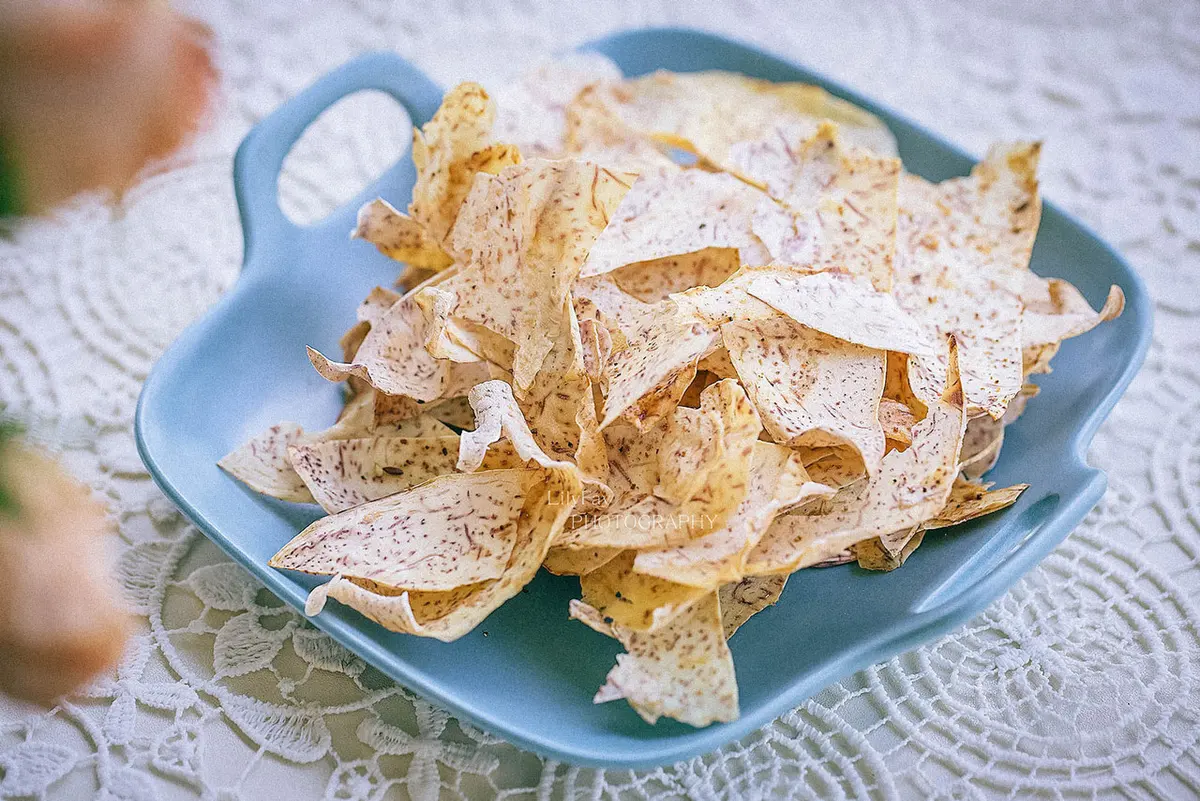
Taro shaved thin and baked crisp in fifteen minutes
Taro peeled and shaved thin, rinsed of surface starch, then baked at 180 C with garlic salt, barbecue spice and a little sugar until it shatters.
- Prep15 min
- Cook15 min
- Serves3
- LevelEasy
Ingredients
| 250 g | taro , weighed after peeling |
| 10 g | vegetable oil , for spraying |
| 4 g | parsley and garlic salt |
| 4 g | barbecue seasoning |
| 4 g | caster sugar |
Method
- Heat a fan oven to 180 C. Peel the taro and cut it in half lengthways.
- Shave the halves into thin slices with a vegetable peeler.
- Rinse the slices several times, until the water stops running milky, then dry them on kitchen paper.
- Spray a baking tray lightly with oil and lay the slices out in one layer, overlapping as little as possible.
- Spray the tops with oil, then scatter the garlic salt, the barbecue seasoning and the sugar over them.
- Bake for 15 minutes.
- Leave the slices on the tray to cool. They stick while they are hot and release as they cool.
Notes
- The sugar is not there for sweetness. It browns before the taro does and gives the edges their colour, so do not leave it out.
- A mandoline set to 2 mm gives more even slices than a peeler, and even slices are the difference between a tray that crisps and a tray that burns at the thin end.
- Taro must be cooked through. Raw taro holds calcium oxalate crystals that itch, and while a thin shaving at this temperature is safe, a thick one that browns on the outside and stays raw inside is not.
Ratios and technique checked against 莉莉菲 on Douguo (刀削真芋头片,非油炸更健康). The method here is written by Stellaok; the photograph is the source kitchen's, credited on the image above and linked back to the page it came from. No recipe text is reproduced.