Ripe bananas do double duty here: their mash provides the moisture that milk would normally supply, and their sweetness means the only added sugar is a spoonful of condensed milk. The texture comes from repeated stacking and pressing, which builds thin layers without a rolling pin.
Chinese · Breakfast
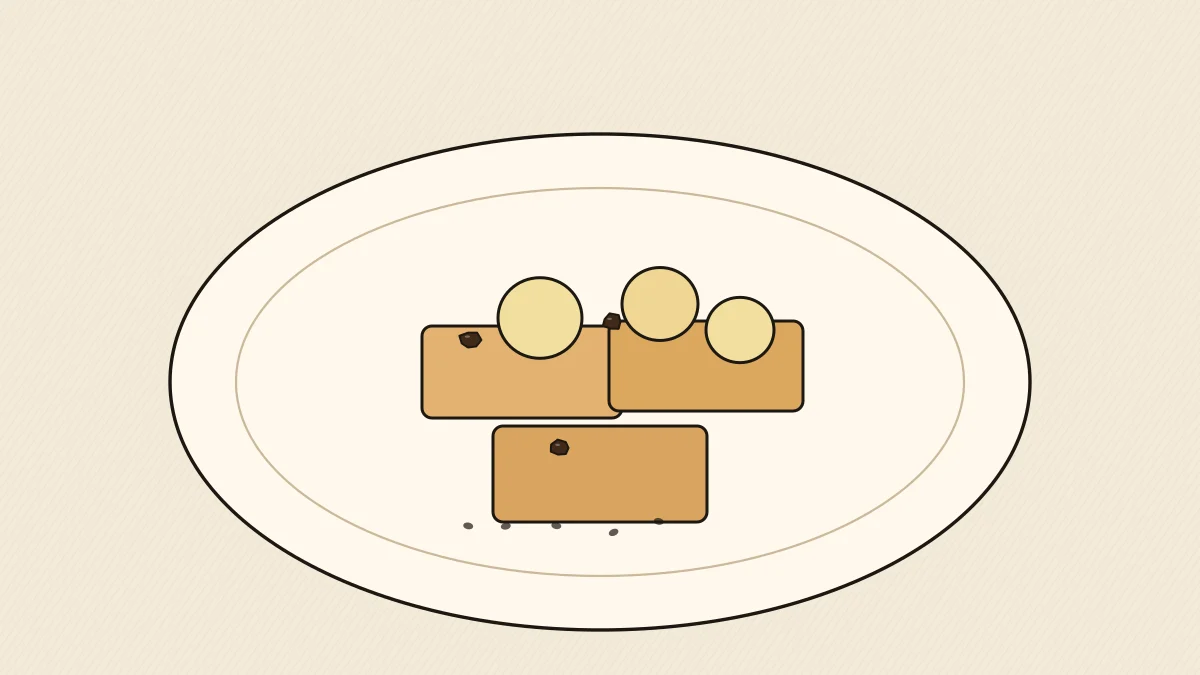
Banana and raisin scones folded and stacked by hand
Mashed banana replaces most of the liquid in a scone dough that gets stacked and folded like rough puff, then chilled, cut and baked until the surface goes faintly crisp.
- Prep25 min
- Cook20 min
- Serves8
- LevelEasy
Ingredients
| 220 g | cake flour |
| 4 g | baking powder |
| 1.5 g | salt |
| 45 g | butter, softened |
| 120 g | mashed ripe banana |
| 40 g | beaten egg, plus extra for brushing |
| 10 g | condensed milk, plus more for serving |
| 40 g | raisins |
| a few | banana slices, for decoration |
Method
- Rub the butter into the flour, baking powder and salt with your fingers until the mixture looks like coarse crumbs.
- Add the banana mash, the 40 g of egg and the condensed milk, and fold until the dough barely comes together.
- Scatter in the raisins and fold them through.
- Press the dough flat, fold it in half, press again, and repeat the fold three or four times; each stack adds a thin layer that shows in the crumb.
- Roll to about 1.5 cm thick and freeze for 20 minutes, just enough to firm the butter back up.
- Preheat the oven to 180 degrees Celsius for 10 minutes, then cut the chilled slab into eight pieces with a sharp knife, pressing straight down rather than twisting.
- Arrange on a tray with space between them, top each with a banana slice, and brush the surface with egg wash.
- Bake about 20 minutes, until the tops firm up and show a light crust.
Notes
- Stop folding as soon as the dough holds together; working it further makes the scones tight.
- A drizzle of condensed milk over the warm scones covers anyone with a sweeter tooth.
- Straight cuts rise higher than twisted ones, because the layers stay level.
Ratios and technique checked against 南风微醺 on Douguo (香蕉提子司康). The method here is written by Stellaok; the photograph is the source kitchen's, credited on the image above and linked back to the page it came from. No recipe text is reproduced.