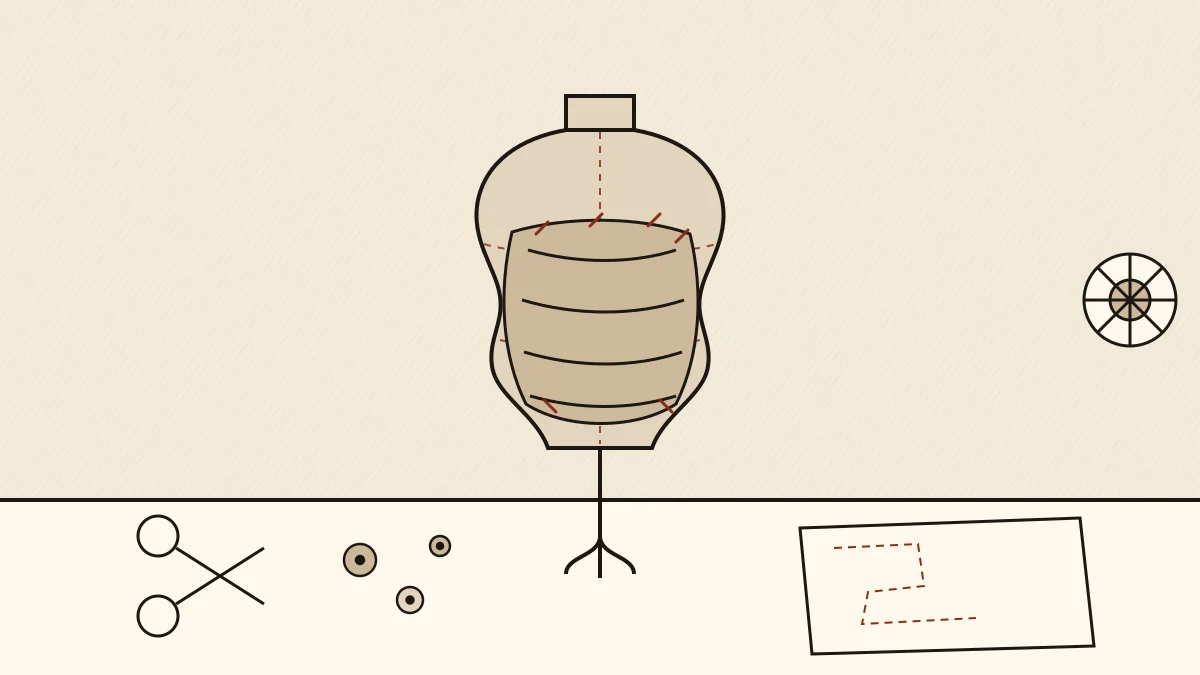
Dressmaker has sold more than 482,000 copies since it launched on Steam on 21 September, according to estimates from Video Game Insights. The game was made by three full-time and three part-time developers at Free Lives, the South African studio behind Terra Nil, and it was not expected to do this.
The shape of the sales curve is the unusual part. Maximum daily concurrent players were just under 8,000 on day one, according to the same estimates, then climbed to just over 35,000 by day seven and more than 43,000 by day 14. That is a 5.4-fold increase in peak concurrency after launch, which is the opposite of the pattern almost every game follows.
GamesIndustry.biz interviewed the team, and the explanation they give is uncomfortable for anyone who models audiences from store tags.
The curve went up because players kept showing each other
Sabrina Becker, who is an expert dressmaker in real life as well as part of the team, describes the mechanism as sharing: people post what they made, other people see it and want to make something too, and then they post theirs. The game had no paid marketing in the West, though Hau-Yoon says some creators in China were paid, and the player base is mostly North American and European.
The team knew something was different during playtesting. Among nearly 200 playtesters, the median playtime was 30 hours. "For a normal game, that's already really high," Jonathan Hau-Yoon says, and some playtesters passed 400 hours in a game with nowhere near 400 hours of authored content. Players invented their own themes over Discord, including one heirloom dress that was exported and passed from person to person, each adding a layer to it.
That is a design outcome, not a marketing one. The tools were open enough that the audience could set its own goals, and the sharing loop did the work an advertising budget usually does.
The audience existed and nobody was selling to it
Eighty-five percent of the game's social media followers are women. Becker's read is that the market was never missing, only unserved: she points to the 1990s and 2000s, when household PCs carried dress-up games and Barbie titles and the gender split among players was narrower, and argues that the genre simply stopped being made.
"When I first met her, she was wearing a dress that she'd made herself," Hau-Yoon says of the project's origin, which began with him trying to find a costume design game for Becker during the pandemic and failing. Monster Hunter World became a favourite for its dressing-up layer, and the gap between that and what she actually wanted became the brief.
The result is a game whose audience includes people who would not describe themselves as gamers, which is a commercial category the industry has been slow to price. Resident Evil Requiem selling 8 million copies is the kind of number that gets a genre funded. Dressmaker's number is smaller and arguably more instructive, because it came from a group that publishers have been treating as already served.
A Steam-first studio that always wanted a handheld
Dressmaker is a PC game, which is an odd home for an audience that mostly does not live on Steam. Hau-Yoon says the team always imagined it on mobile and Switch, but that building for those platforms costs more in both money and effort than shipping on Steam first, where iteration is fast. Ports are now in progress and being done partly in house.
The studio is also supporting the game with free updates, with an online competition mode in development and no promises about the Hatmaker sequel that players keep requesting. That restraint is worth noting: the obvious move after a hit is to announce the next one immediately.
The wider indie market has been moving the other way, toward tools that let players generate content rather than make it by hand. Nexus Mods chose to label AI mods rather than ban them, which is the same argument about authorship arriving from the other side.
What would prove this was repeatable
The test of the Dressmaker thesis is whether other studios follow it. Free Lives has shown that a well-made game about a craft, aimed at an audience that is not being served, can grow for two weeks without a marketing budget. The next twelve months will show whether anyone with a budget believes it.