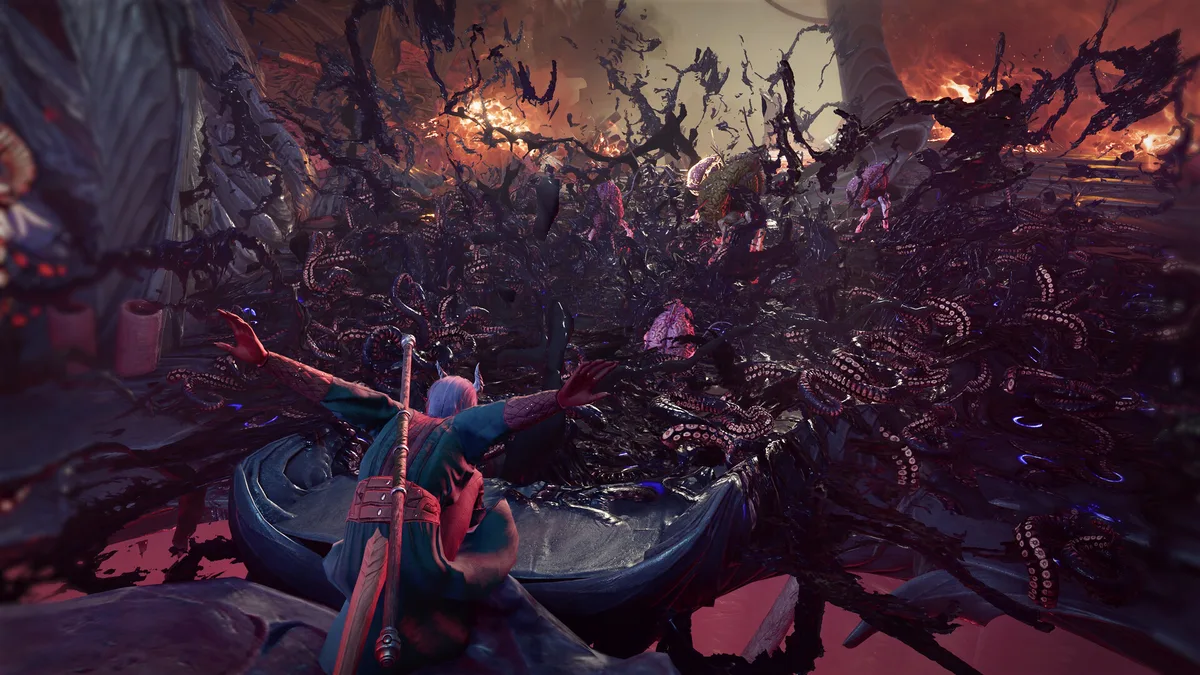
A single modder has spent nearly two years building an expansion for Baldur's Gate 3, and it is out. SquallyDaBeanz's release adds a custom region called The Chionthar Wilds, described as "a whole new region to experience that is similar in scope to the Act 1 Wilderness."
For anyone who has played the game, that comparison sets the bar high. The Act 1 wilderness is the section most people point to when they explain why Baldur's Gate 3 works: open, densely authored, and full of encounters that connect to each other.
What is actually in it
The zone holds more than 30 new encounters with new creatures, over 70 new items, and its own quests, NPCs and cutscenes. You reach it after finishing the Shadow-Cursed Lands, ideally with a party around level 8, or through a quickstart that drops you in directly with options for equipment and hirelings.
The most thoughtful piece of design is invisible. Experience in the new zone is artificially reduced, so clearing the whole expansion does not leave you overlevelled for Act 3. That is the sort of consideration that separates a mod someone finished from a mod someone shipped, and it reflects a decision about how the content should sit inside a full playthrough rather than beside it.
Where it stops, and why that is fine
PC Gamer's write-up is straightforward about the limits. The new characters are unvoiced. Speak with Dead and Speak with Animals do not work on the new content. Choices made in Chionthar do not ripple into Act 3.
Each of those is a boundary set by cost rather than skill. Voice acting for a cast of NPCs is a budget line, and Baldur's Gate 3 shipped with a fully voiced cast that no volunteer project can match. Speak with Dead requires writing an alternate dialogue tree for everything in the zone that can die, which roughly doubles the writing for a spell most players cast twice. Cross-act reactivity is the hardest of the three, because it means writing into state that the base game's third act reads from, and that is exactly where a mod starts corrupting saves for people who installed it mid-playthrough.
Those constraints explain the shape of the thing rather than diminishing it. A solo developer picked the parts that could be done well and declined the parts that could only be done badly.
The result is a more traditional CRPG expansion: read the text, roll the dice, no cinematic reaction shot when you make a decision. Players who came to Baldur's Gate 3 through its production values will feel the drop. Players who came from Neverwinter Nights modules will feel at home.
The scale that makes this notable
Two years of unpaid work by one person, producing a region comparable in size to a chunk of a game that took hundreds of people to build, is the number worth sitting with. Larian shipped a toolset and an engine stable enough that an individual could operate at that scale, and then did not shut anyone down for using it.
That combination is rarer than it should be. The most durable value a studio gets after launch usually comes from players doing things the studio did not plan, which is the argument Gabe Newell has been making for a decade and which the Thief community demonstrated again this week by adding dynamic shadows to a 1998 engine.
It also lands at a moment when the commercial side of the industry is producing less of this kind of thing, not more. Studios under pressure ship smaller, safer projects and cut the teams that would have built an expansion like this internally. The Chionthar Wilds is roughly what a paid DLC would have been two console generations ago. It arrived free, from one person, because the tools were open and nobody stopped them.